Last Minute Review
Dementia — Last Minute Review
A last-minute review of high-yield facts — dense tables and one-liners for RITE/Board prep. Not a substitute for the full notes.
Major Dementias — Head-to-Head Comparison
| Feature | AD | DLB | FTD (bvFTD) | VaD |
|---|---|---|---|---|
| Age Onset | >65 (sporadic); 30–60 (familial) | >50 | 45–65 | >60 |
| Presenting Symptom | Episodic memory loss (encoding deficit) | Visual hallucinations, fluctuating cognition, RBD | Personality change, disinhibition, apathy | Stepwise cognitive decline, executive dysfunction |
| Memory | Early, prominent (encoding failure — poor recognition) | Less impaired early; retrieval deficit (recognition better) | Relatively preserved early | Retrieval deficit; recognition > recall |
| Behavior | Apathy, depression; late agitation/sundowning | Depression, apathy, anxiety, Capgras delusion | Disinhibition, compulsions, hyperorality, loss of empathy | Apathy, depression, pseudobulbar affect |
| Hallucinations | Late, if present | Recurrent, well-formed visual (core feature) | Rare | Rare |
| Motor Features | Normal until late | Spontaneous parkinsonism (symmetric); RBD; falls | Parkinsonism late; may overlap CBS/PSP/MND | Focal signs, gait disorder, pseudobulbar palsy |
| EEG | Generalized slowing (nonspecific) | Fluctuating generalized slowing; posterior slow waves | Usually normal early | Focal slowing (if infarct) |
| MRI | Hippocampal/medial temporal atrophy; posterior parietal | Relative hippocampal preservation vs AD; generalized atrophy | Frontal + anterior temporal atrophy (often asymmetric) | White matter lesions, lacunes, strategic infarcts |
| PET/SPECT | FDG: temporoparietal hypometabolism; amyloid PET +; tau PET + | FDG: occipital hypometabolism; DAT scan ↓ uptake | FDG: frontal/anterior temporal hypometabolism | Patchy hypometabolism matching vascular territory |
| CSF | Aβ42 ↓, p-tau ↑, t-tau ↑ | May have low Aβ42 (co-AD pathology); α-synuclein SAA emerging | Neurofilament light ↑; no specific marker | No specific fluid biomarker |
| Pathology | Aβ42 plaques + hyperphosphorylated tau NFTs (3R+4R) | α-synuclein Lewy bodies (cortical + brainstem) | Tau (3R or 4R) or TDP-43 | Vascular injury ± mixed AD pathology |
| Genetics | PSEN1 (14), APP (21), PSEN2 (1); APOE ε4 risk | GBA, SNCA (rare); APOE ε4 risk factor | C9orf72, MAPT, GRN | NOTCH3 (CADASIL); HTRA1 (CARASIL) |
| Treatment | AChE inhibitors, memantine, lecanemab (anti-amyloid) | Rivastigmine; avoid typical antipsychotics; melatonin for RBD | SSRIs (trazodone); no disease-modifying therapy | Vascular risk factor management; AChE inhibitors (modest) |
💎 Board Pearl
The encoding deficit in AD (poor recognition AND recall) distinguishes it from the retrieval deficit in DLB/VaD/subcortical dementias (recognition preserved, recall impaired). This is a classic board differentiator.FTD Variants
| Variant | Core Features | Language | Behavior | Atrophy Pattern | Pathology | Genetics |
|---|---|---|---|---|---|---|
| bvFTD | Early personality change, disinhibition, apathy, loss of empathy, hyperorality, executive dysfunction | Echolalia, perseveration (late) | Prominent from onset: disinhibition, compulsions, social inappropriateness | Frontal + anterior temporal (often asymmetric) | Tau (3R or 4R) or TDP-43 | C9orf72 (TDP-43); MAPT (tau); GRN (TDP-43) |
| nfvPPA (nonfluent/agrammatic) | Effortful, halting, agrammatic speech; apraxia of speech | Nonfluent; grammar errors; comprehension preserved for single words | Intact early | Left posterior frontal / insular (perisylvian) | Tau (4R — CBD/PSP-type) | Usually sporadic; occasional MAPT |
| svPPA (semantic) | Loss of word meaning; surface dyslexia; prosopagnosia (right-sided) | Fluent but empty speech; anomia; lost single-word comprehension | Behavioral changes late (overlap bvFTD) | Left anterior temporal “knife-edge” atrophy | TDP-43 (Type C) | Rarely familial |
| lvPPA (logopenic) | Word-finding pauses; phonemic paraphasias; impaired sentence repetition | Slow, hesitant; intact grammar; intact single-word comprehension | Intact early | Left posterior temporal / inferior parietal | AD pathology (Aβ + tau) in most cases | AD genetics (APOE ε4 risk) |
| FTD-ALS/MND | bvFTD + upper and lower motor neuron signs; poor prognosis (2–3 yr) | Variable | bvFTD-type behavioral changes | Frontal atrophy + motor cortex involvement | TDP-43 | C9orf72 (most common genetic link FTD–ALS) |
| Abbreviations: bvFTD = behavioral variant frontotemporal dementia; nfvPPA = nonfluent/agrammatic variant primary progressive aphasia; svPPA = semantic variant PPA; lvPPA = logopenic variant PPA; FTD-ALS/MND = FTD with amyotrophic lateral sclerosis/motor neuron disease; CBS = corticobasal syndrome; PSP = progressive supranuclear palsy | ||||||
💎 Board Pearl
lvPPA is the “language phenotype of AD” — most cases have underlying amyloid + tau pathology, unlike nfvPPA (tau) and svPPA (TDP-43). Memory aid: svPPA = TDP, nfvPPA = tau, lvPPA = AD.Alzheimer Disease — Genetics & Biomarkers
AD Genetics
| Gene | Chromosome | Inheritance | Mechanism |
|---|---|---|---|
| APP | 21 | Autosomal dominant | Amyloid precursor protein; Down syndrome (trisomy 21) → extra APP copy → AD by age 40–50 |
| PSEN1 | 14 | Autosomal dominant | Most common cause of familial early-onset AD; γ-secretase subunit; onset 30–50 yr; most aggressive |
| PSEN2 | 1 | Autosomal dominant | Rarest familial form; γ-secretase subunit; variable onset 40–70 yr |
| APOE ε4 | 19 | Risk factor (NOT deterministic) | Strongest genetic risk factor for sporadic AD; ε4/ε4 = 8–15× risk; ε2 is protective |
| TREM2 | 6 | Risk factor | Microglial receptor; variants impair amyloid clearance; ~2–4× risk (similar to single ε4 allele) |
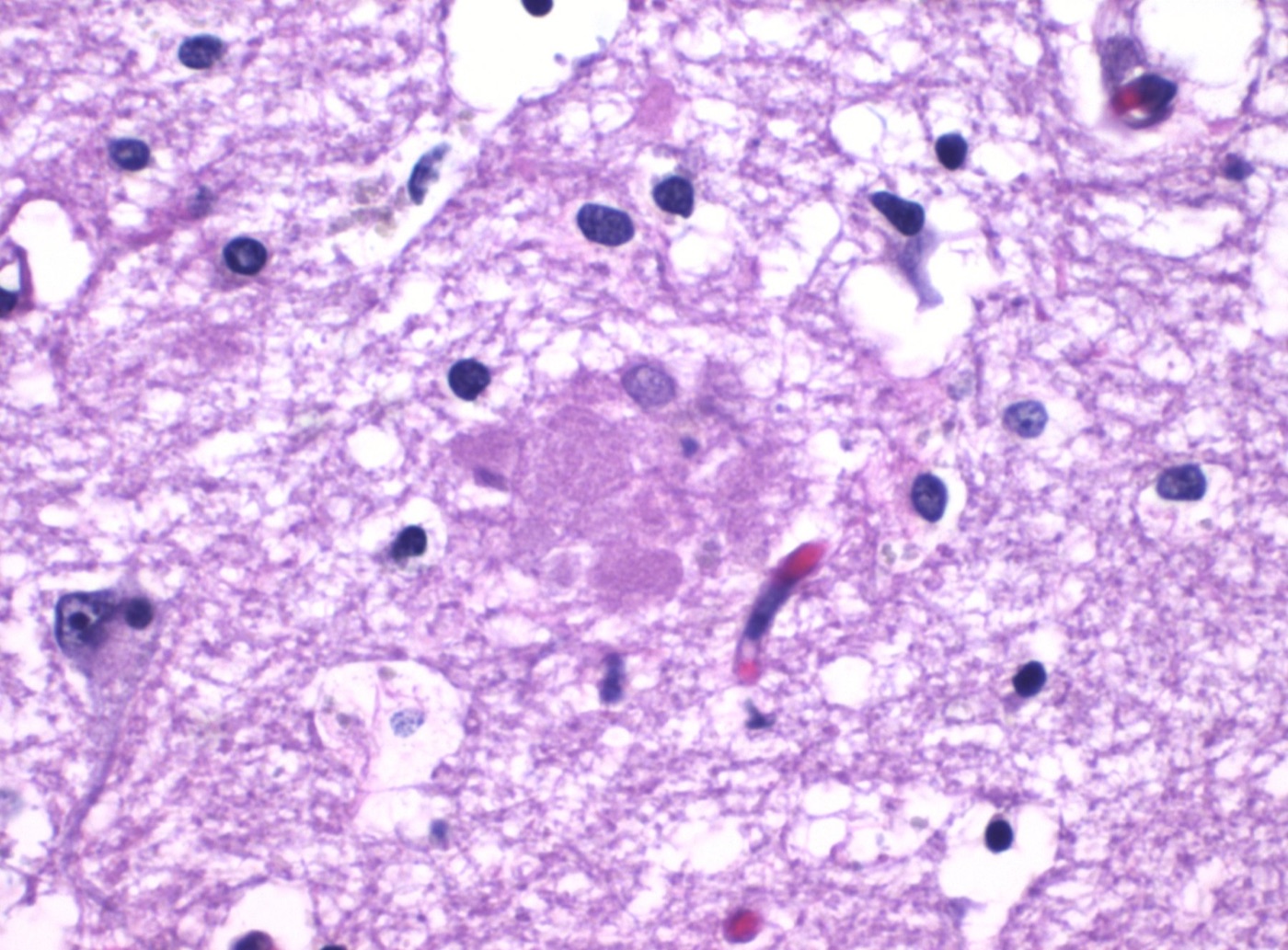
AD Biomarkers
| Biomarker | AD Pattern | Interpretation |
|---|---|---|
| CSF Aβ42 | Decreased | Trapped in plaques; Aβ42/40 ratio more accurate than Aβ42 alone |
| CSF p-tau (181, 217) | Increased | Specific for AD tau pathology; p-tau 217 emerging as most accurate single fluid biomarker |
| CSF t-tau | Increased | Nonspecific marker of neuronal injury (also ↑ in CJD, stroke) |
| Amyloid PET (florbetapir, florbetaben, flutemetamol) | Positive (cortical uptake) | Highly sensitive; negative amyloid PET essentially rules out AD |
| Tau PET (flortaucipir) | Positive (temporal → parietal spread) | Correlates with clinical severity; follows Braak staging pattern |
| FDG-PET | Temporoparietal hypometabolism | Posterior cingulate involved early; occipital cortex spared (unlike DLB) |
| MRI | Hippocampal / medial temporal atrophy | Posterior parietal atrophy in posterior cortical atrophy variant |
| Plasma p-tau 217 | Increased | Blood-based biomarker; high accuracy for AD diagnosis; clinical adoption growing |
💎 Board Pearl
The AT(N) framework defines AD biologically: A+ (amyloid positive) is required to be on the Alzheimer continuum. A+T+N+ = full AD pathological change. A− = not AD, regardless of T or N status.Rapidly Progressive Dementias
| Disorder | Time Course | Key Features | Diagnostic Test | Pathology |
|---|---|---|---|---|
| sCJD | Weeks–months; median survival ~5 months | RPD + myoclonus + ataxia → akinetic mutism | DWI cortical ribboning; CSF RT-QuIC; EEG PSWCs; 14-3-3 | PrPSc; spongiform change |
| vCJD | Months; median ~14 months | Young (~28 yr); psychiatric onset → ataxia → dementia; no PSWCs on EEG | MRI pulvinar sign; tonsil biopsy; methionine homozygosity codon 129 | PrPSc; florid plaques |
| FFI | 6–36 months | Intractable insomnia + autonomic dysfunction + dementia | PRNP D178N + Met at codon 129; FDG-PET thalamic hypometabolism | Selective thalamic degeneration |
| GSS | 2–10 years (slow for prion) | Cerebellar ataxia first, dementia later | PRNP mutations (P102L most common) | Multicentric amyloid plaques |
| Anti-NMDAR encephalitis | Weeks–months (treatable) | Young woman; psychiatric onset → seizures → movement disorder → autonomic instability → coma | CSF anti-NMDAR antibodies; ovarian teratoma in ~50% of women | Antibody-mediated; reversible with treatment |
| Anti-LGI1 encephalitis | Weeks–months (treatable) | Older adult; faciobrachial dystonic seizures; limbic encephalitis; hyponatremia | Serum anti-LGI1 antibodies (serum > CSF sensitivity) | Antibody-mediated; reversible |
| Anti-Hu (ANNA-1) | Weeks–months | Limbic encephalitis + sensory neuropathy; SCLC (small cell lung cancer) | Anti-Hu antibodies (serum + CSF); CT chest for SCLC | Intracellular antibody; poor response to immunotherapy; tumor Rx critical |
| Anti-CV2/CRMP5 | Weeks–months | Encephalomyelitis, chorea, neuropathy, optic neuritis; SCLC/thymoma | Anti-CV2/CRMP5 antibodies | Intracellular antibody; treat underlying tumor |
| Hashimoto encephalopathy (SREAT) | Subacute; fluctuating course | Encephalopathy + seizures + myoclonus + tremor; may mimic CJD | Elevated anti-TPO/anti-Tg; diagnosis of exclusion; steroid-responsive | Unclear mechanism; not thyroid-related |
| Whipple disease | Chronic → subacute | Diarrhea, arthralgias, weight loss + cognitive decline; oculomasticatory myorhythmia (pathognomonic) | Small bowel biopsy: PAS+ macrophages; CSF T. whipplei PCR | Tropheryma whipplei infection |
💎 Board Pearl
CJD diagnostic triad: (1) DWI cortical ribboning + caudate/putamen on MRI, (2) RT-QuIC in CSF (most specific, ~98%), (3) periodic sharp wave complexes on EEG. RT-QuIC has replaced 14-3-3 as the CSF test of choice. ~20–25% of RPDs have a treatable cause — always send autoimmune encephalitis panels.Prion Diseases
| Disease | Prion Protein | Key Feature | EEG | MRI | Age / Course |
|---|---|---|---|---|---|
| sCJD | Spontaneous PrPC → PrPSc; 85–90% of CJD | RPD + myoclonus + ataxia → akinetic mutism | PSWCs (60–70%) | DWI cortical ribboning + caudate/putamen | 55–75 yr; ~5 months median survival |
| fCJD | PRNP mutations (E200K most common); autosomal dominant; 10–15% of CJD | Similar to sCJD; younger onset; may have longer course | PSWCs (variable) | Similar to sCJD | Younger than sCJD; variable course |
| vCJD | BSE (“mad cow”) transmission; PrPSc | Psychiatric onset → ataxia → dementia; methionine homozygosity codon 129 | PSWCs absent | Pulvinar sign (bilateral pulvinar FLAIR hyperintensity) | Mean ~28 yr; ~14 months survival |
| FFI | PRNP D178N + methionine at codon 129 | Intractable insomnia + autonomic dysfunction (hyperthermia, tachycardia) | Absent sleep spindles; progressive loss of sleep architecture | FDG-PET: thalamic hypometabolism; MRI often normal early | 40–60 yr; 6–36 months |
| GSS | PRNP mutations (P102L most common); autosomal dominant | Cerebellar ataxia first, dementia later (“slow prion disease”) | Usually nonspecific | Cerebellar atrophy | 40–60 yr; 2–10 years (much slower than sCJD) |
| Kuru | Ritualistic cannibalism (Fore tribe, Papua New Guinea) | “Trembling with fear” — cerebellar ataxia → dementia | Nonspecific | Cerebellar atrophy | Historical; essentially extinct |
Clinical Pearl
Do NOT confuse sCJD and vCJD imaging: sCJD = DWI cortical ribboning + caudate/putamen restriction; vCJD = pulvinar sign (bilateral pulvinar FLAIR hyperintensity). PSWCs on EEG are typical of sCJD but absent in vCJD. PRNP D178N + methionine at codon 129 = FFI; same D178N + valine at codon 129 = familial CJD.
Reversible Causes of Dementia
| Cause | Key Clue | Diagnostic Test | Treatment |
|---|---|---|---|
| NPH | Triad: gait apraxia (“magnetic gait”) + incontinence + dementia | MRI: ventriculomegaly disproportionate to atrophy (Evans index >0.3); large-volume LP (30–50 mL) with pre/post gait assessment | VP shunt; gait improves first and most |
| B12 Deficiency | Subacute combined degeneration (dorsal columns + corticospinal tracts); megaloblastic anemia; peripheral neuropathy | Serum B12 ↓; methylmalonic acid ↑; homocysteine ↑ | B12 supplementation (IM or high-dose PO); neurologic damage may be irreversible if prolonged |
| Hypothyroidism | Cognitive slowing, depression, constipation, weight gain, cold intolerance | TSH ↑; free T4 ↓ | Levothyroxine replacement |
| Neurosyphilis | Argyll Robertson pupils (accommodate but don’t react to light); tabes dorsalis | RPR/VDRL screen → FTA-ABS confirm; CSF VDRL (specific but insensitive) | IV penicillin G × 10–14 days |
| HIV-Associated Dementia | Subcortical dementia pattern; CD4 typically <200; diffuse WM changes | HIV testing; MRI: WM changes + atrophy | ART (CNS-penetrating regimens preferred) |
| Depression (Pseudodementia) | “I don’t know” answers (vs confabulation in true dementia); effort-dependent poor performance | Neuropsych testing: intact recognition memory; rapid onset correlating with depressive episode | SSRIs; psychotherapy; cognition improves with depression treatment |
| Medication-Induced | Anticholinergics, benzodiazepines, opioids, anticonvulsants; temporal relationship to drug initiation | Medication reconciliation; Beers criteria review | Deprescribing; dose reduction |
| Autoimmune Encephalitis | Subacute cognitive decline + seizures + psychiatric symptoms; often young; may fluctuate | Serum + CSF autoimmune encephalitis antibody panel | Immunotherapy (steroids, IVIg, PLEX); tumor search and removal if paraneoplastic |
| Chronic Subdural Hematoma | Elderly; history of falls/anticoagulation; headache; fluctuating cognition; focal deficits | CT head: crescent-shaped hypodense/mixed collection | Surgical evacuation (burr hole drainage) |
| Hepatic Encephalopathy | Liver disease; asterixis; confusion; day-night reversal; elevated ammonia | Ammonia level; MRI: T1 hyperintensity in globus pallidus (manganese) | Lactulose + rifaximin; treat precipitating cause |
| Hashimoto Encephalopathy (SREAT) | Encephalopathy + seizures + myoclonus; fluctuating course; may mimic CJD | Elevated anti-TPO / anti-thyroglobulin; diagnosis of exclusion | Steroid-responsive (IV methylprednisolone → oral taper) |
| Wernicke-Korsakoff | Wernicke triad: confusion + ataxia + ophthalmoplegia; Korsakoff: anterograde amnesia + confabulation | Clinical diagnosis; MRI: mammillary body + periaqueductal gray enhancement; low thiamine level | IV thiamine BEFORE glucose; high-dose thiamine replacement |
💎 Board Pearl
NPH triad = Wet (incontinence), Wacky (dementia), Wobbly (gait apraxia) — gait improves first with shunting and is the best predictor of shunt response. Large-volume LP (30–50 mL) with pre/post gait testing is both diagnostic and prognostic.Dementia Workup — Standard Battery
| Test | Purpose | Key Finding |
|---|---|---|
| MRI brain (with DWI) | Structural imaging for all patients | Atrophy pattern, WM disease, infarcts, masses, NPH, CJD (DWI ribboning) |
| FDG-PET | Differentiate AD vs FTD vs DLB when uncertain | AD: temporoparietal ↓; FTD: frontal ↓; DLB: occipital ↓ |
| Amyloid PET | Confirm/exclude AD pathology in atypical or young-onset cases | Positive = AD likely; negative essentially rules out AD |
| CBC | Screen for anemia, infection, malignancy | Megaloblastic anemia (B12); pancytopenia |
| CMP | Electrolytes, glucose, renal/hepatic function | Metabolic encephalopathy; hepatic/renal failure |
| TSH | Screen for hypothyroidism | Elevated TSH = hypothyroidism (reversible) |
| B12 / Folate | Screen for B12 deficiency | Low B12 + high MMA = B12 deficiency (reversible) |
| RPR / VDRL | Screen for neurosyphilis | Positive → confirm with FTA-ABS → LP for CSF VDRL |
| HIV | Screen for HIV-associated dementia | Positive with low CD4 + subcortical dementia pattern |
| ESR / CRP | Screen for inflammatory/vasculitic processes | Elevated in CNS vasculitis, infection, systemic autoimmune disease |
| Lumbar Puncture (CSF) | AD biomarkers, CJD (RT-QuIC), infection, autoimmune, NPH | AD: Aβ42 ↓ + p-tau ↑; CJD: RT-QuIC +; autoimmune: specific antibodies |
| EEG | CJD, NCSE, encephalopathy | CJD: PSWCs; NCSE: seizure activity; encephalopathy: diffuse slowing |
| Neuropsych Testing | Quantify cognitive domains; differentiate dementia subtypes | Amnestic pattern (AD); executive/subcortical (VaD/FTD); visuospatial (DLB/PCA) |
Clinical Pearl
Minimum workup for all new dementia evaluations = MRI brain + B12 + TSH + CMP + CBC. Add RPR, HIV, LP, and advanced imaging based on clinical suspicion. EEG is mandatory if RPD is suspected (rules out NCSE and evaluates for CJD).Cognitive Domains & Localization
| Domain | Tested By | Localization | Dementia Association |
|---|---|---|---|
| Episodic Memory | Word list recall, story recall (delayed recall + recognition) | Medial temporal lobe / hippocampus | AD (encoding deficit — poor recall AND recognition) |
| Semantic Memory | Object naming, category fluency, word definitions | Anterior/inferolateral temporal lobe | svPPA (loss of word meaning); late AD |
| Working Memory | Digit span forward/backward, serial 7s | Dorsolateral prefrontal cortex, parietal | Subcortical dementias (VaD); lvPPA (phonological loop) |
| Visuospatial | Clock drawing, figure copy, line bisection, Benton judgment of line orientation | Right parietal / parieto-occipital | DLB; posterior cortical atrophy (AD variant) |
| Executive Function | Trails B, Wisconsin Card Sort, Stroop, verbal fluency (letter) | Prefrontal cortex (dorsolateral, orbitofrontal) | bvFTD; VaD (subcortical); DLB |
| Language | Boston Naming Test, sentence repetition, fluency, comprehension | Left perisylvian (Broca, Wernicke, arcuate fasciculus) | PPA variants (nfvPPA, svPPA, lvPPA) |
| Social Cognition | Emotion recognition, theory of mind tasks, faux pas recognition | Orbitofrontal cortex, anterior temporal, insula, amygdala | bvFTD (loss of empathy, social inappropriateness) |
| Praxis | Pantomime tool use, imitate gestures, ideomotor/ideational tasks | Left parietal (dominant hemisphere), supplementary motor area | Corticobasal syndrome; moderate–severe AD |
💎 Board Pearl
MCI subtypes predict dementia type: amnestic MCI → AD; dysexecutive MCI → VaD or FTD; visuospatial MCI → DLB; language MCI → PPA/FTD. Multi-domain amnestic MCI has the highest conversion rate to AD dementia (~10–15% per year).Dementia Pharmacotherapy
| Drug | Class | Indication | MOA | Key Side Effects |
|---|---|---|---|---|
| Donepezil | AChE inhibitor | AD mild–severe (most widely used) | Reversible acetylcholinesterase inhibition → ↑ ACh at synapse | GI (nausea, diarrhea); bradycardia; vivid dreams; insomnia |
| Rivastigmine | AChE + BuChE inhibitor | AD mild–moderate; PDD (only AChEI FDA-approved for PDD) | Dual cholinesterase inhibition (acetyl + butyryl) | GI effects; patch formulation reduces GI side effects |
| Galantamine | AChE inhibitor + nicotinic receptor modulator | AD mild–moderate | AChE inhibition + allosteric nicotinic receptor potentiation | GI; bradycardia; syncope |
| Memantine | NMDA receptor antagonist | AD moderate–severe (add to AChEI) | Blocks excessive glutamate excitotoxicity at NMDA receptor | Dizziness, headache, confusion; generally well-tolerated |
| Lecanemab | Anti-amyloid monoclonal antibody (anti-protofibril) | Early AD with confirmed amyloid pathology | Binds soluble Aβ protofibrils → clearance of amyloid | ARIA (edema + hemorrhage); APOE ε4 homozygotes at highest ARIA risk; infusion reactions |
| Aducanumab | Anti-amyloid monoclonal antibody | Early AD (controversial; accelerated FDA approval) | Targets aggregated Aβ (fibrils + plaques) | ARIA (higher incidence than lecanemab); limited clinical use |
| Brexpiprazole | Atypical antipsychotic (partial D2/5-HT1A agonist) | Agitation in AD (first FDA-approved drug for this indication, 2023) | Partial dopamine D2 and serotonin 5-HT1A agonism; 5-HT2A antagonism | Headache, dizziness, UTI; black box warning: increased mortality in elderly with dementia-related psychosis |
| SSRIs (citalopram, sertraline, trazodone) | Selective serotonin reuptake inhibitors | Behavioral symptoms in dementia (depression, agitation, bvFTD behaviors) | Serotonin reuptake inhibition | QTc prolongation (citalopram at higher doses); sedation (trazodone); hyponatremia |
Clinical Pearl
Avoid anticholinergics in all dementias (worsen cognition). Avoid typical antipsychotics (haloperidol) in DLB — severe/fatal neuroleptic sensitivity. If antipsychotics needed in DLB: quetiapine (lowest risk) or pimavanserin; never haloperidol. All antipsychotics carry a black box warning for increased mortality in elderly dementia patients.
Key Numbers & Board Traps
| Fact | Value / Detail |
|---|---|
| MCI conversion rate to dementia | ~10–15% per year (amnestic MCI → AD); some revert to normal |
| APOE ε4 homozygous risk | 8–15× increased risk of sporadic AD; shifts onset earlier by ~10–15 years |
| AD amyloid plaques vs NFTs | Plaques: extracellular Aβ42; NFTs: intracellular hyperphosphorylated tau; NFT burden correlates with clinical severity (not plaques) |
| CJD median survival | sCJD ~5 months; vCJD ~14 months; GSS 2–10 years; FFI 6–36 months |
| Huntington CAG repeat | ≥36 repeats = pathologic (≥40 = full penetrance); anticipation (paternal transmission → earlier onset in offspring) |
| NPH opening pressure | Normal or low-normal (<18 cm H2O) — that is why it is called “normal pressure” hydrocephalus; Evans index >0.3 |
| Sundowning timing | Late afternoon / early evening; worsening confusion, agitation, behavioral symptoms in moderate–severe AD |
| MMSE dementia cutoff | ≤24/30 suggests cognitive impairment; ≤18 = moderate; ≤10 = severe; limited by education/language bias |
| MoCA cutoff | <26/30 = abnormal; more sensitive than MMSE for MCI and executive/visuospatial deficits; +1 point if ≤12 years education |
| Clock Drawing Test | Tests: circle (planning), numbers (visuospatial/semantic), hands (executive/abstraction); quick screen for parietal + executive dysfunction |
| DLB 1-year rule | Dementia before or within 1 year of parkinsonism = DLB; dementia >1 year after established PD = PDD |
| RT-QuIC specificity | ~98% specificity, ~92% sensitivity for sCJD; most specific antemortem CSF test |
| CADASIL imaging pattern | Anterior temporal + external capsule WML (pathognomonic); NOTCH3 gene, chromosome 19 |
| C9orf72 repeat | GGGGCC hexanucleotide expansion on chromosome 9; most common genetic cause of both FTD and ALS |
| Braak NFT stages | I–II: entorhinal (preclinical); III–IV: limbic/hippocampal (MCI); V–VI: neocortical (dementia) |
💎 Board Pearl
- Early behavioral change + preserved memory = bvFTD, not AD
- Haloperidol in patient with dementia + visual hallucinations + parkinsonism → DLB neuroleptic sensitivity
- DWI cortical ribboning = CJD, not encephalitis
- PPA with impaired sentence repetition = lvPPA (AD pathology), not FTD pathology
- Dementia + gait + incontinence with disproportionate ventriculomegaly = NPH, not VaD
- “I don’t know” answers = pseudodementia; near-miss/confabulation = true dementia
- PRNP D178N + methionine at codon 129 = FFI; same mutation + valine = familial CJD
- C9orf72 = TDP-43, not tau; MAPT = tau
- vCJD = pulvinar sign + no PSWCs; sCJD = cortical ribboning + PSWCs
- APOE ε4 is a risk factor, not deterministic — homozygotes have the highest risk but can still be unaffected