The RITE
The Residency In-Service Training Examination — the AAN’s annual self-assessment that tracks your neurology knowledge and closely predicts how you’ll do on the boards.
Two RITE forms — Adult & Child Neurology
Starting February 2027, the RITE is given as two separate exams — Adult Neurology and Child Neurology — with each program automatically assigned to the appropriate form. Both run in the same February 4–9, 2027 window and mirror the ABPN’s separate adult and child certification blueprints.
The child form shifts weight toward pediatric epilepsy syndromes, genetic/developmental and metabolic disease, neurodevelopment, and pediatric neuroinfectious disease — and away from adult vascular and movement disorders. Eight-hour single session, unchanged.
The RITE is developed by the American Academy of Neurology (AAN) as a self-assessment — not a pass/fail exam — for every US neurology and child-neurology resident to track knowledge as they train.
It helps residents pinpoint strengths and weaknesses and lets program directors monitor educational progress. Because its content mirrors the ABPN board blueprint, your RITE percentile is a genuine early read on board readiness.
Exam format
Questions
Multiple-choice items built around video, imaging (CT, MR, EEG) and full-color pathology — the same formats the boards use.
One sitting
Eight consecutive hours with breaks taken as you wish; length and structure parallel the ABPN certification exam.
Taken at your program
Administered at your own institution (not a commercial center); some programs offer a remote option. Given annually in February.
RITE predicts board performance
Strong, published correlation
A 2013 Neurology study (Schuh LA et al.) found significant correlation between RITE and ABPN board scores:
- Adult neurologists: r = 0.77 (2008), r = 0.65 (2009) — RITE accounted for 42–59% of board-score variance.
- Child neurologists: r = 0.74 (2008), r = 0.56 (2009) — RITE accounted for 31–55% of board-score variance.
| RITE score | Board pass (2008) | Board pass (2009) |
|---|---|---|
| < 59% | 72% | 73% |
| 60–64% | 90% | 94% |
| 65–69% | 98% | 99% |
| 70–74% | 99% | 99% |
| 75%+ | 100% | 100% |
What a RITE score report looks like
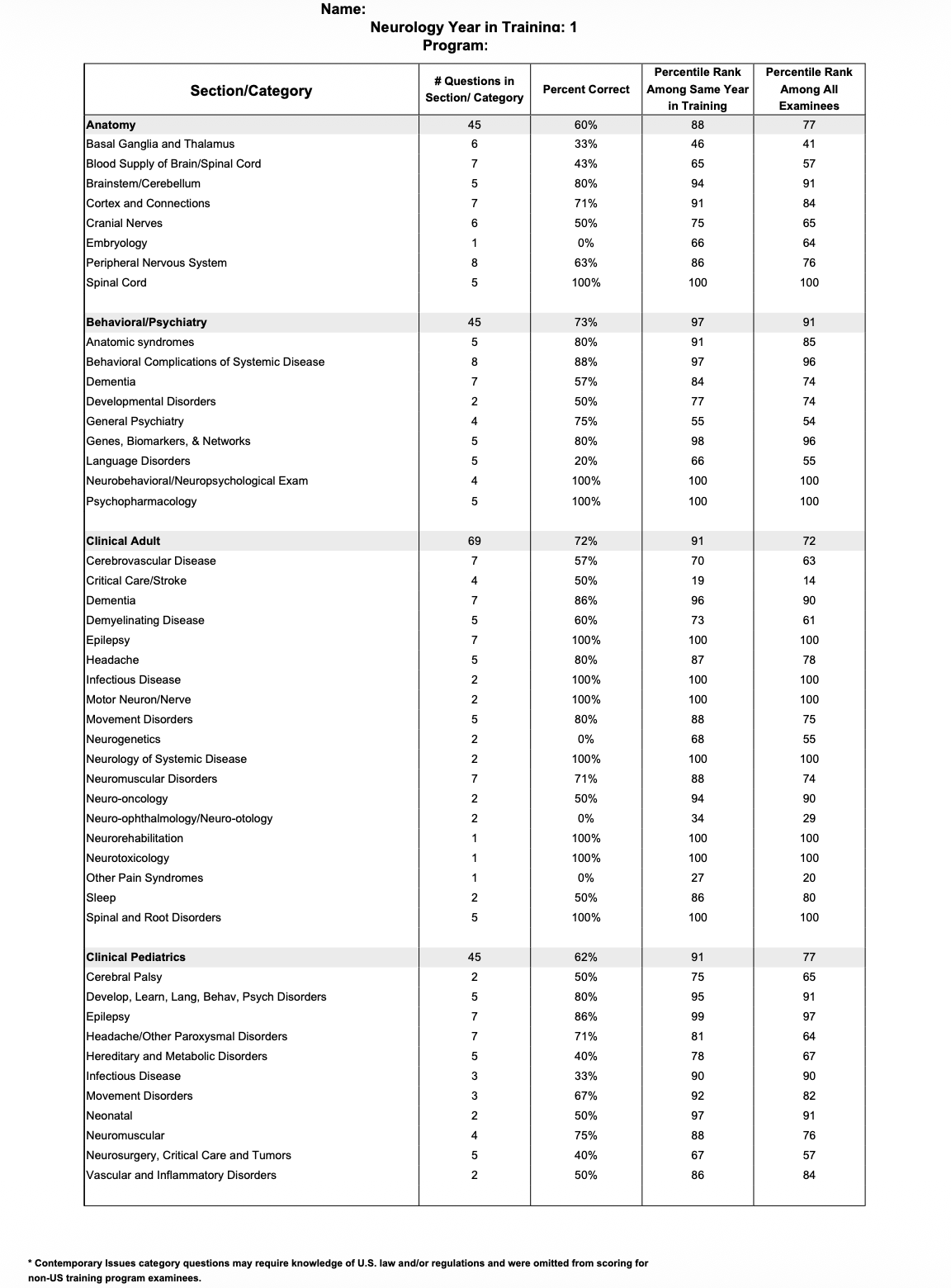
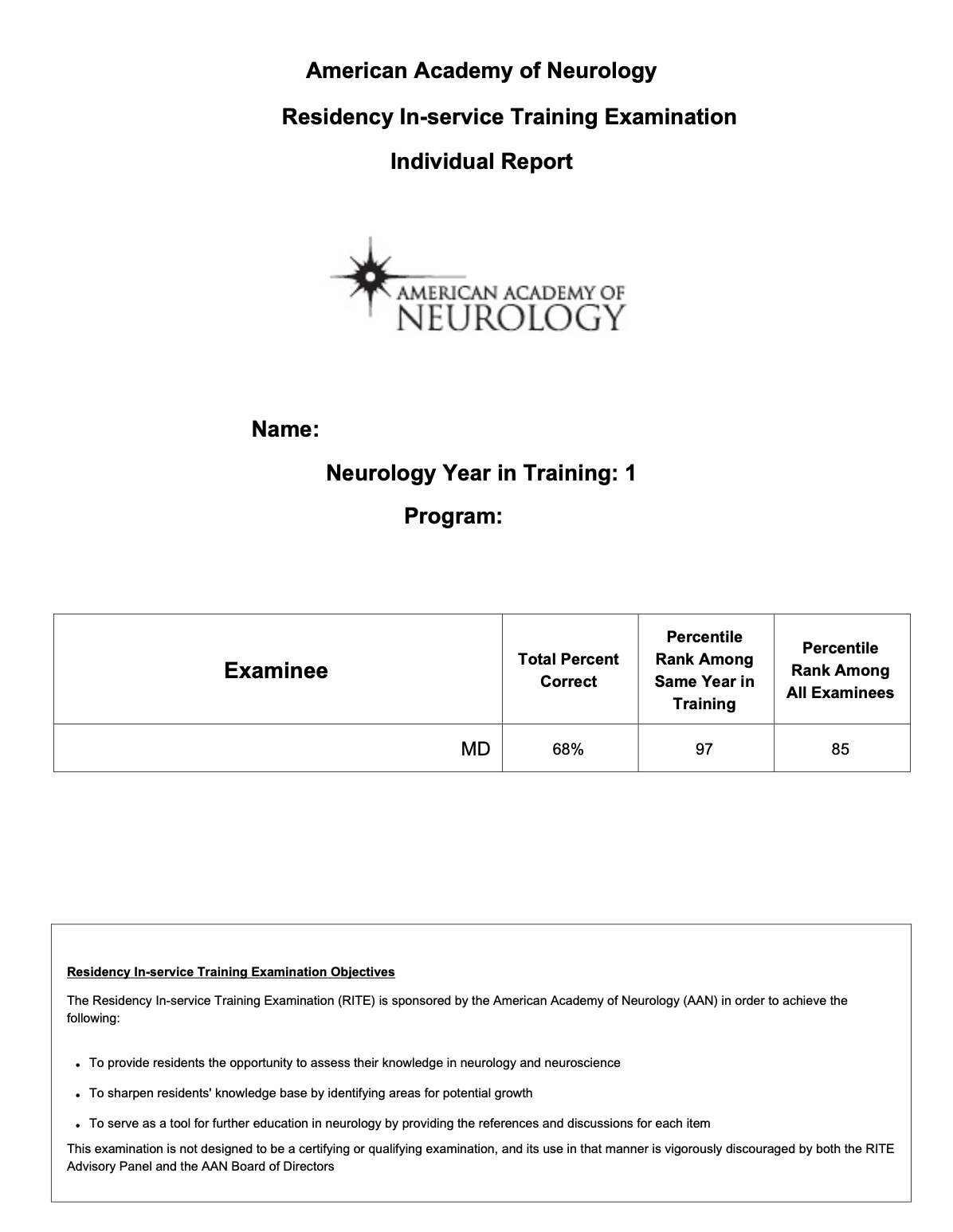
Your report gives a total percent correct, national percentile ranks, and a full breakdown by category and topic.
 ⤢ Expand
How to use your RITE results
RITE key dates
Next cycle dates not yet published — usually announced in September.
How HighYieldNeuro helps
Board-blueprint questions
1,400+ questions written to the same content areas the RITE and ABPN exam test — practice maps straight to your weak categories.
Percentile-style tracking
My Progress shows accuracy and percentile by specialty against active peers — the same lens as your RITE report, updated as you study.
Target the gaps
Weak-area flashcards, study notes and spaced repetition point you straight at the categories where your percentile is lowest.
- AAN RITE: aan.com — RITE
- ABPN (board certification): abpn.org
- Reference: Schuh LA et al. “The Residency In-service Training Examination in Neurology: resident performance and predictive value.” Neurology 2013;81:364–369.
- Exam dates and format per the AAN and are subject to change — always confirm with your program.
RITE content blueprint
RITE content blueprint
2027 weights not yet published. These are the ten areas of the AAN 2024 RITE blueprint (400 items), the latest public one; the AAN says the RITE outline parallels the ABPN certification exam.
Subtopics are ABPN outline headings, which the AAN says the RITE parallels; the AAN blueprint itself lists only area totals.
Behavioral neurology and neurocognitive disorders — 8% (32 items)
- Delirium, dementia, and other cognitive disorders
- Neurodevelopmental disorders
- Higher cortical function and clinical syndromes
- Encephalopathy, coma, brain death
- Pseudobulbar affect
Epilepsy and episodic disorders — 10% (40 items)
- Generalized and focal seizures
- Electroclinical syndromes
- Structural-metabolic epilepsies
- Nonepileptic paroxysmal disorders
Genetic and developmental disorders — 8% (32 items)
- Heritable metabolic disorders
- Chromosomal and gene-related disorders
- Developmental brain malformations
- Neurocutaneous syndromes
- Cerebral palsy, teratogens, congenital anomalies
Vascular neurology — 10% (40 items)
- Ischemic stroke and TIA
- Intracerebral and subarachnoid hemorrhage
- Cerebral venous thrombosis
- Other cerebrovascular disorders (RCVS, CADASIL, malformations)
- Cardiovascular and prothrombotic stroke causes
Neuromuscular diseases (including autonomic nervous system disorders) — 12% (48 items)
- Motor neuron, root, plexus, and nerve disorders
- Neuromuscular junction disorders
- Muscle disorders
- Hyperexcitability disorders
- Autonomic nervous system disorders
Demyelinating diseases — 10% (40 items)
- Multiple sclerosis and variants
- Neuromyelitis optica
- ADEM and transverse myelitis
Movement disorders — 10% (40 items)
- Parkinson disease and parkinsonism
- Tremor, chorea, dystonia
- Tic disorders, myoclonus, ataxia
- Functional movement disorders
Trauma and spinal diseases; neuroinfectious; metabolic, nutritional and toxic; neuroimmunologic and paraneoplastic — 12% combined (48 items)
- Brain and spinal trauma, spinal cord disorders (2–4%)
- Neuroinfectious diseases (2–4%)
- Metabolic, nutritional, toxin, drug, and physical-agent disorders (3–5%)
- Neuroimmunologic and paraneoplastic CNS disorders, CNS vasculitis (1–3%)
Sleep; psychiatric; questions not tied to a specific disorder — 10% combined (40 items)
- Sleep disorders (3–5%)
- Psychiatric disorders (5–7%)
- Non-disorder-specific topics: anatomy, pharmacology, medical-legal, life cycle (1–3%)
Neuro-ophthalmology and neuro-otology; neuro-oncology; headache and pain — 10% combined (40 items)
- Neuro-ophthalmologic and neuro-otologic disorders (2–4%)
- Neuro-oncologic disorders (1–3%)
- Headache and pain disorders (4–6%)
From February 2027 the RITE has an adult and a child form. Both contain adult and child content in different proportions; the AAN has not published weights for each form.
Source: AAN 2024 RITE blueprint
Full curriculum
The official ABPN content outline — the same topics for both exams, weighted differently. Toggle to compare Adult vs Child, or download the full guide.
| # | Category | Adult | Child |
|---|---|---|---|
| 01 | Headache and pain disorders | 4-6% | 7-9% |
| 02 | Epilepsy and episodic disorders | 8-12% | 8-12% |
| 03 | Sleep disorders | 3-5% | 3-5% |
| 04 | Genetic and developmental disorders | 6-8% | 8-12% |
| 05 | Vascular neurology | 8-12% | 2-4% |
| 06 | Neuromuscular diseases | 9-13% | 8-12% |
| 07 | Movement disorders | 8-12% | 4-6% |
| 08 | Demyelinating diseases | 7-11% | 5-7% |
| 09 | Neuroinfectious diseases | 2-4% | 7-9% |
| 10 | Brain and spinal trauma and spinal diseases | 2-4% | 4-6% |
| 11 | Neuro-ophthalmologic and neuro-otologic disorders | 2-4% | 2-4% |
| 12 | Metabolic diseases, nutritional deficiency states, and disorders due to toxins, drugs, and physical agents | 3-5% | 5-7% |
| 13 | Neuro-oncologic disorders | 1-3% | 1-3% |
| 14 | Behavioral neurology and neurocognitive disorders | 7-9% | 7-9% |
| 15 | Psychiatric disorders | 5-7% | 4-6% |
| 16 | Autonomic nervous system disorders | 1-2% | 1-2% |
| 17 | Questions not associated with a specific neurologic disorder | 1-3% | 4-6% |
| 18 | Neuroimmunologic and paraneoplastic CNS disorders | 1-3% | 1-3% |
01Headache and pain disorders4-6%7-9%
- A. Headache
- 01. Primary headaches
- a. Migraine
- b. Tension-type headache
- c. Cluster headache and other trigeminal autonomic cephalalgias
- d. Paroxysmal hemicrania
- xx. Other (exertional headache, etc.)
- 02. Secondary headaches
- a. Headache due to head and neck trauma (posttraumatic headache)
- b. Headache due to cranial or cervical vascular disorder (thunderclap headache, reversible cerebral vasoconstriction syndrome (RCVS), arterial dissection, cerebral hemorrhage, ischemia)
- c. Headache due to nonvascular intracranial disorder (hydrocephalus, idiopathic intracranial hypertension, increased intracranial pressure and cerebral edema, low-CSF-pressure headaches, tumors)
- d. Headache due to infection
- e. Headache due to a substance or its withdrawal
- f. Headache or facial pain due to disorder of cranium, neck, eyes, ears, nose, sinuses, and teeth
- g. Headache due to psychiatric disorder
- 03. Cranial neuralgia, central and primary facial pain (trigeminal neuralgia, idiopathic facial pain, post-herpetic neuralgia)
- 01. Primary headaches
- B. Pain disorders
- 01. Central pain syndromes (thalamic, phantom, etc.)
- 02. Complex regional pain syndromes
02Epilepsy and episodic disorders8-12%8-12%
- A. Generalized seizures
- 01. Tonic-clonic (in any combination)
- 02. Absence
- a. Typical
- b. Atypical
- c. Absence with special features
- 03. Myoclonic
- 04. Clonic
- 05. Tonic
- 06. Atonic
- 07. Epileptic spasms
- 08. Negative myoclonus
- 09. Myoclonic-atonic
- B. Focal seizures
- 01. Preserved consciousness
- 02. Impaired consciousness
- 03. Focal to bilateral tonic-clonic
- XX. Other
- C. Electroclinical syndromes
- 01. Neonatal period
- a. Self-limited familial neonatal seizures
- b. Early infantile developmental and epileptic encephalopathy
- i. Early myoclonic encephalopathy
- ii. Ohtahara syndrome
- c. Symptomatic neonatal seizures
- xx. Other early infantile epileptic encephalopathy
- 02. Infancy
- a. Infantile epileptic spasms syndrome
- b. Myoclonic epilepsy in infancy
- c. Self-limited nonfamilial infantile epilepsy
- d. Self-limited familial infantile epilepsy
- e. Severe myoclonic epilepsy of infancy (Dravet syndrome)
- f. Myoclonic encephalopathy in nonprogressive disorders
- g. Epilepsy of infancy with migrating focal seizures
- h. Hemiconvulsion-hemiplegia-epilepsy syndrome
- xx. Other developmental epileptic encephalopathies with onset in infancy
- 03. Childhood
- a. Febrile seizures plus
- b. Self-limited epilepsy with autonomic seizures (Panayiotopoulos syndrome)
- c. Epilepsy with myoclonic-atonic seizures
- d. Self-limited epilepsy with centrotemporal spikes
- e. Sleep-related hypermotor (hyperkinetic) epilepsy
- f. Childhood occipital visual epilepsy
- g. Epilepsy with myoclonic absences
- h. Lennox-Gastaut syndrome
- i. Developmental and/or epileptic encephalopathy with spike-and-wave activation in sleep (Landau-Kleffner syndrome)
- j. Childhood absence epilepsy
- k. Acquired epileptic aphasia, including Landau-Kleffner syndrome
- l. GLUT-1 syndrome
- m. Photosensitive occipital lobe epilepsy
- xx. Other developmental epileptic encephalopathies with onset in childhood
- 04. Adolescence through adult
- a. Juvenile absence epilepsy
- b. Juvenile myoclonic epilepsy
- c. Epilepsy with generalized tonic-clonic seizures alone
- d. Autosomal dominant epilepsy with auditory features
- xx. Other familial temporal lobe epilepsies
- 05. Other benign
- 06. Other idiopathic
- 07. Other generalized/multifocal
- 01. Neonatal period
- D. Less specific age relationship
- 01. Familial focal epilepsy with variable foci
- 02. Reflex epilepsies
- 03. Progressive myoclonus epilepsies
- 04. Mesial temporal lobe epilepsy with hippocampal sclerosis
- 05. Rasmussen syndrome
- 06. Focal emotional (gelastic) seizures with hypothalamic hamartoma
- E. Epilepsies attributed to and organized by structural-metabolic causes
- 01. Structural (including tumors, vascular malformations)
- 02. Infection
- 03. Trauma
- 04. Perinatal insults
- 05. Malformations of cortical development (including neurocutaneous syndromes)
- 06. Mitochondrial and metabolic disorders
- 07. Stroke
- 08. Genetic epilepsies
- F. Unknown whether focal or generalized
- G. Conditions with epileptic seizures traditionally not diagnosed as a form of epilepsy
- 01. Benign neonatal seizures
- 02. Febrile seizures
- 03. Provoked seizures
- 04. Eclampsia
- 05. Single unprovoked seizures
- H. Nonepileptic paroxysmal disorders
- 01. Syncope and anoxic seizures
- 02. Functional seizures and other behavioral, psychological, and psychiatric disorders
- 03. Sleep-related conditions
- 04. Paroxysmal movement disorders
- 05. Migraine-associated disorders
- 06. Miscellaneous events
- XX. Other
- I. Status epilepticus
- 01. Convulsive
- 02. Nonconvulsive
- 03. Focal motor
- 04. Tonic status
- 05. Febrile
- 06. Refractory and super-refractory
- XX. Unknown
03Sleep disorders3-5%3-5%
- A. Insomnia
- 01. Psychological insomnia
- 02. Inadequate sleep hygiene
- B. Sleep-disordered breathing
- 01. Obstructive sleep apnea
- 02. Central apnea syndromes
- 03. Sleep-related hypoventilation disorders
- C. Central disorders of hypersomnolence
- 01. Narcolepsy (with and without cataplexy)
- 02. Kleine-Levin syndrome
- 03. Hypersomnia due to a medical condition
- 04. Insufficient sleep syndrome
- D. Circadian rhythm sleep-wake disorders
- 01. Delayed sleep-wake phase disorder
- 02. Advanced sleep-wake phase disorder
- 03. Irregular sleep-wake rhythm disorder
- 04. Non-24-hour sleep-wake phase disorder
- E. Parasomnias
- 01. Non-REM-related parasomnias
- a. Arousal disorders
- i. Sleepwalking
- ii. Sleep terrors
- iii. Confusional arousals
- b. Sleep-related eating disorder
- a. Arousal disorders
- 02. REM-related parasomnias
- a. REM sleep behavior disorder
- b. Recurrent isolated sleep paralysis
- c. Nightmare disorder
- 03. Other
- a. Exploding head syndrome
- b. Sleep-related hallucinations
- c. Sleep enuresis
- d. Parasomnia due to a general medical disorder
- e. Medication/substance-related parasomnia
- f. Unspecified parasomnia
- 01. Non-REM-related parasomnias
- F. Sleep-related movement disorders
- 01. Periodic limb movements of sleep
- 02. Sleep-related limb cramps
- 03. Sleep-related bruxism
- 04. Benign myoclonus of infancy
- G. Sleep disorders in other conditions
- 01. Sleep disturbances in movement conditions
- a. Parkinson disease
- b. Multisystem atrophy
- c. Dementia with Lewy bodies
- d. Spinocerebellar degeneration
- e. Huntington disease
- 02. Neuromuscular disorders (amyotrophic lateral sclerosis, myasthenia gravis, muscular dystrophy, and others)
- 03. Alzheimer disease
- 04. Effects of sleep disorders on cardiovascular/cerebrovascular risk factors
- a. Hypertension
- b. Atrial fibrillation
- c. Congestive heart failure
- d. Myocardial infarction
- e. Stroke
- 01. Sleep disturbances in movement conditions
04Genetic and developmental disorders6-8%8-12%
- A. Heritable disorders of metabolism
- 01. Disorders of amino acid metabolism and transport
- a. Phenylketonuria
- b. Nonketotic hyperglycinemia (glycine encephalopathy)
- c. Maple syrup urine disease
- d. Homocystinuria
- e. Tyrosinemia
- f. Hartnup disease
- xx. Other
- 02. Disorders of organic acid metabolism
- a. Methylmalonic acidemia
- b. Propionic acidemia
- c. Glutaric acidemia
- xx. Other
- 03. Disorders of urea metabolism
- a. Ornithine transcarbamylase deficiency
- b. N-acetylglutamate synthase deficiency
- c. Carbamoyl phosphate synthetase 1 deficiency
- d. Citrullinemia
- e. Argininosuccinic aciduria
- f. Argininemia
- g. Hyperornithinemia-hyperammonemia-homocitrullinuria (HHH) syndrome
- xx. Other
- 04. Disorders of monosaccharide metabolism and transport
- a. Galactosemia
- b. Glucose transporter deficiency
- c. Other
- 05. Mitochondrial disorders
- a. Myoclonic epilepsy with ragged red fibers (MERRF)
- b. Mitochondrial encephalopathy, lactic acidosis, and stroke-like episodes (MELAS)
- c. Kearns-Sayre syndrome
- d. Mitochondrial neurogastrointestinal encephalomyopathy (MNGIE)
- e. Leigh syndrome
- f. Leber hereditary optic neuropathy
- g. Progressive external ophthalmoplegia
- xx. Other
- 06. Peroxisomal disorders
- a. Zellweger syndrome
- b. Adrenoleukodystrophy and adrenomyeloneuropathy
- c. Other
- 07. Disorders of purine metabolism
- a. Lesch-Nyhan syndrome
- b. Other
- 08. Lysosomal disorders
- a. Glycogen storage diseases
- i. Pompe disease (Type II; acid maltase deficiency)
- ii. Other
- b. Mucopolysaccharidoses
- i. Hunter syndrome
- ii. Hurler syndrome
- iii. Sanfilippo syndrome
- iv. Morquio syndrome
- v. Maroteaux-Lamy syndrome
- xx. Other
- c. Sphingolipidoses and gangliosidoses
- i. GM1 gangliosidosis
- ii. Tay-Sachs disease (early onset GM2 gangliosidosis)
- iii. Sandhoff disease (late onset GM2 gangliosidosis)
- iv. Fabry disease
- v. Niemann Pick disease
- vi. Gaucher disease
- vii. Krabbe disease
- viii. Metachromatic leukodystrophy
- xx. Other
- a. Glycogen storage diseases
- 09. Other genetic disorders
- a. Pelizaeus-Merzbacher disease
- b. Alexander disease
- c. Canavan disease
- d. Porphyria
- e. Disorders of iron metabolism (e.g., PKAN)
- f. Disorders of copper metabolism (e.g., Wilson disease)
- g. Disorders of neurotransmitter metabolism (e.g., SSADH)
- h. Neuronal ceroid lipofuscinosis
- i. Disorders of cholesterol metabolism
- xx. Other
- XX. Other
- 01. Disorders of amino acid metabolism and transport
- B. Chromosomal disorders
- 01. Autosomal abnormalities
- a. Down syndrome (trisomy 21)
- b. Trisomy 13
- c. Cri du chat syndrome
- d. Uniparental disomy syndromes
- i. Angelman syndrome
- ii. Prader-Willi syndrome
- iii. Other
- e. Williams syndrome
- f. 22q11.2 deletion syndrome (DiGeorge syndrome)
- xx. Other
- 02. X-chromosomal disorders
- a. Fragile X syndrome
- b. Turner syndrome
- c. Other
- 03. Other
- 01. Autosomal abnormalities
- C. Sporadic, gene-related disorders
- 01. Rett syndrome
- 02. Other
- D. Developmental disorders of skull and brain structure
- 01. Anencephaly
- 02. Encephalocele
- 03. Cerebellar and brainstem malformations
- a. Chiari malformations
- b. Cerebellar hypoplasia
- c. Joubert syndrome
- d. Dandy Walker and related variants
- xx. Other
- 04. Cerebral malformations
- a. Holoprosencephaly
- b. Septo-optic dysplasia
- c. Schizencephaly
- d. Migrational abnormalities (including lissencephaly)
- e. Agenesis of the corpus callosum
- f. Hemimegalencephaly
- xx. Other
- 05. Abnormalities of brain and/or head size
- a. Microencephaly and microcephaly
- b. Macroencephaly and macrocephaly (including related systemic overgrowth syndromes)
- c. Other
- 06. Abnormalities of brain CSF spaces
- a. Hydrocephalus
- b. Cystic malformations (including arachnoid, colloid, pineal, dermoid, epidermoid)
- c. Other
- 07. Spinal cord malformations (dysraphism)
- a. Syringomyelia
- b. Diastematomyelia
- c. Tethered cord
- xx. Other
- E. Neurocutaneous syndromes
- 01. Neurofibromatosis 1 and 2
- 02. Tuberous sclerosis
- 03. Sturge-Weber syndrome
- 04. Ataxia-telangiectasia
- 05. Von Hippel-Lindau disease
- 06. Incontinentia pigmenti
- XX. Other
- F. Cerebral palsy
- 01. Spastic cerebral palsy
- 02. Dyskinetic/dystonic cerebral palsy
- 03. Ataxic cerebral palsy
- XX. Other
- G. Teratogens
- H. Multiple congenital anomalies
- XX. Other
05Vascular neurology8-12%2-4%
- A. Ischemic stroke (cerebral infarction and transient ischemic attack)
- 01. Atherosclerosis
- a. Large-artery
- b. Small-artery
- 02. Cardioembolic
- 03. Arterial dissection
- 04. Other vasculopathies, including vasculitis
- a. Noninflammatory
- b. Infectious
- c. Inflammatory
- 05. Spinal cord infarction/ischemia
- XX. Other
- 01. Atherosclerosis
- B. Intracerebral hemorrhage
- 01. Chronic hypertension
- 02. Vascular malformations
- 03. Bleeding diatheses and antithrombotic agents
- 04. Cerebral amyloid angiopathy
- 05. Hemorrhagic tumors
- 06. Pituitary apoplexy
- 07. Locations of intracerebral hemorrhage
- XX. Other
- C. Subarachnoid hemorrhage
- 01. Aneurysm
- 02. Vascular malformations
- 03. Complications (including vasospasm)
- 04. Trauma
- D. Cerebral venous thrombosis
- 01. Pregnancy and puerperium
- 02. Hypercoagulability (thrombophilia)
- 03. Cavernous sinus thrombosis
- XX. Other
- E. Reversible cerebrovascular constriction syndrome (RCVS) and posterior reversible encephalopathy syndrome (PRES)
- F. Sickle cell disease
- G. Unruptured brain aneurysm or unruptured vascular malformation
- H. CADASIL
- I. Primary intraventricular hemorrhage
- J. Carotid cavernous or dural fistulas
- K. Cardiovascular diseases
- L. Stroke genetics
- M. Prothrombotic (hypercoagulable) causes of stroke
- N. Hypoxic-ischemic encephalopathy
- XX. Other
06Neuromuscular diseases9-13%8-12%
- A. Motor neuron disorders
- 01. Sporadic
- a. Amyotrophic lateral sclerosis
- i. Progressive muscular atrophy
- ii. Primary lateral sclerosis
- iii. Progressive bulbar palsy
- a. Amyotrophic lateral sclerosis
- 02. Genetic
- a. Familial amyotrophic lateral sclerosis
- b. Spinal muscular atrophy
- c. Spinobulbar muscular atrophy (Kennedy disease)
- d. Tay-Sachs disease
- e. Distal hereditary motor neuropathy
- 03. Focal, including monomelic amyotrophy (Hirayama disease)
- 04. Paraneoplastic
- 05. Toxic
- a. Lathyrism
- 06. Infectious
- a. Polio
- b. Rabies
- c. West Nile virus
- d. Tetanus
- e. Enterovirus D68 (EV-D68)
- 01. Sporadic
- B. Spinal root disorders
- 01. Cervical
- 02. Thoracic
- 03. Lumbosacral
- 04. Polyradiculopathy
- 05. Myeloneuropathy
- C. Plexopathies
- 01. Brachial
- a. Traumatic (neonatal, penetrating injury)
- b. Radiation-induced
- c. Neuralgic amyotrophy (brachial neuritis)
- d. Hereditary neuralgic amyotrophy
- e. Neoplastic
- f. Neurogenic thoracic outlet syndrome
- xx. Other
- 02. Lumbosacral
- a. Traumatic (hematoma, ischemic)
- b. Radiation-induced
- c. Diabetic radiculoplexus neuropathy
- d. Neoplastic
- xx. Other
- 01. Brachial
- D. Peripheral nerve disorders
- 01. Mononeuropathies
- 02. Mononeuropathy multiplex
- 03. Polyneuropathy
- a. Hereditary
- i. Demyelinating
- (a) CMT1a
- (b) CMTX
- (c) Hereditary neuropathy with tendencies to pressure palsy (HNPP)
- (d) Refsum disease
- (e) Metachromatic leukodystrophy
- ii. Axon loss
- (a) CMT2
- (b) Adrenoleukodystrophy
- iii. TTR amyloid polyneuropathy
- iv. Porphyric neuropathy
- i. Demyelinating
- b. Acquired
- i. Immune mediated
- (a) Guillain-Barré syndrome
- (i) Acute inflammatory demyelinating polyradiculoneuropathy (AIDP)
- (ii) Miller Fisher variant (GQ1b antibody)
- (iii) Acute motor axonal neuropathy
- (iv) Acute motor and sensory axonal neuropathy
- (v) Pharyngeal-cervical-brachial
- (b) Chronic inflammatory demyelinating polyradiculoneuropathy (CIDP)
- (c) Multifocal mononeuropathy with conduction block
- (d) Distal acquired demyelinating symmetric neuropathy (DADS)
- (e) Multifocal acquired demyelinating sensory and motor polyneuropathy (MADSAM)
- (f) Paraneoplastic
- (g) Amyloidosis
- (h) Sarcoidosis
- (i) Paraproteinemic
- (a) Guillain-Barré syndrome
- ii. Metabolic
- (a) Diabetic
- (b) Nutritional
- (i) Vitamin B6 deficiency
- (ii) Vitamin B12 deficiency
- (iii) Copper deficiency
- (iv) Alcohol
- (v) Hypervitaminosis B6
- (xx) Other
- (c) Critical illness
- iii. Toxic
- (a) Arsenic, lead, thallium
- (b) n-Hexane
- (c) Organophosphates
- (d) Drug-induced
- (xx) Other
- iv. Infectious
- (a) Diphtheria
- (b) HIV
- (c) Leprosy
- (d) Lyme disease
- (e) Syphilis
- (xx) Other
- i. Immune mediated
- c. Dorsal root ganglion disorders
- i. Nutritional/toxic, including hypervitaminosis B6
- ii. Autoimmune/inflammatory
- (a) Hu antibody syndrome
- (b) Connective tissue disease (Sjögren syndrome)
- iii. Friedreich ataxia
- iv. Idiopathic
- d. Small fiber neuropathy
- a. Hereditary
- E. Neuromuscular junction transmission disorders
- 01. Myasthenia gravis
- 02. Lambert-Eaton myasthenic syndrome
- 03. Botulism
- 04. Congenital/hereditary myasthenia
- 05. Medication-induced
- XX. Other
- F. Muscle disorders
- 01. Hereditary
- a. Muscular dystrophies
- i. Duchenne/Becker
- ii. Facioscapulohumeral
- iii. Limb-girdle
- (a) Type 1
- (b) Type 2
- iv. Myotonic
- (a) Myotonic dystrophy 1 (including distal presentation)
- (b) Myotonic dystrophy 2
- v. Oculopharyngeal
- vi. Myofibrillar (including distal presentation)
- vii. Congenital muscular dystrophy
- b. Congenital myopathies
- i. Central core
- ii. Nemaline
- iii. Centronuclear/myotubular (including distal presentation)
- xx. Other
- c. Metabolic myopathies
- i. Mitochondrial
- (a) Myoclonic epilepsy with ragged red fibers (MERRF)
- (b) Mitochondrial myopathy, lactic acid, and stroke (MELAS)
- (c) Kearns-Sayre syndrome
- (xx) Other
- ii. Glycogenoses
- (a) Pompe disease/Acid maltase deficiency
- (b) Myophosphorylase deficiency (McArdle disease)
- (c) Other
- iii. Lipidoses
- (a) Carnitine deficiency
- (b) Carnitine palmitoyltransferase 2 deficiency (CPT2)
- (c) Other
- i. Mitochondrial
- d. Periodic paralyses/channelopathies
- i. Hypokalemic
- ii. Hyperkalemic
- iii. Andersen-Tawil syndrome
- iv. Nondystrophic myotonias
- a. Muscular dystrophies
- 02. Acquired
- a. Inflammatory myopathies
- i. Polymyositis
- ii. Dermatomyositis
- iii. Inclusion body myositis
- (a) Sporadic (including distal presentation)
- (b) Hereditary (including distal presentation)
- iv. Sarcoidosis
- v. HIV
- b. Critical illness myopathy
- c. Toxic/drug-induced myopathy
- i. HMG-CoA reductase
- ii. Alcohol
- iii. Chloroquine/hydroxychloroquine
- iv. Corticosteroids
- v. Colchicine
- vi. Antiretroviral medications
- d. Metabolic/endocrine
- i. Hypothyroid
- ii. Hyperthyroid
- iii. Hypokalemic
- iv. Cushing disease
- e. Necrotizing autoimmune myopathy
- i. Anti-HMG-CoA reductase myopathy
- ii. Anti-signal recognition particle (anti-SRP)
- a. Inflammatory myopathies
- 03. Rhabdomyolysis
- 04. Abnormalities of muscle tone
- a. Hypotonia
- b. Spasticity
- c. Rigidity
- 01. Hereditary
- G. Hyper-excitability disorders
- 01. Stiff-person syndrome
- 02. Potassium channelopathies (including Isaacs syndrome)
- H. Autonomic dysfunction in neuromuscular diseases
- 01. Autoimmune autonomic neuropathy and ganglionopathy (including Sjögren syndrome)
- 02. Guillain-Barré syndrome (autonomic manifestations)
- 03. Paraneoplastic autonomic neuropathies
- 04. Fabry disease
- 05. Autonomic neuropathies due to infectious disease
- a. American trypanosomiasis Chagas disease
- b. Leprosy
- c. Diphtheria
- d. HIV
- 06. Diabetes (autonomic manifestations)
- 07. Amyloidosis
- 08. Tonic pupil (Adie syndrome)
- 09. Small fiber polyneuropathy (autonomic manifestations)
- 10. Toxic neuropathies
- a. Vacor
- b. Hexane
- c. Ciguatoxin
- d. Vincristine
- e. Cisplatin, paclitaxel
- f. Heavy metals (e.g., arsenic, mercury, thallium)
- g. Postural orthostatic tachycardia syndrome (POTS)
- xx. Other
- XX. Other
07Movement disorders8-12%4-6%
- A. Parkinson disease and parkinsonism
- 01. Neurodegenerative
- a. Idiopathic Parkinson disease
- i. Dementia with Lewy bodies
- b. Multiple system atrophy
- c. Progressive supranuclear palsy
- d. Corticobasal degeneration
- a. Idiopathic Parkinson disease
- 02. Posttraumatic parkinsonism
- 03. Vascular parkinsonism
- 04. Drug-induced parkinsonism
- 05. Hydrocephalus and normal-pressure hydrocephalus
- 06. Juvenile parkinsonism
- 01. Neurodegenerative
- B. Tremor
- 01. Essential tremor
- 02. Physiological tremor
- 03. Drug-induced tremor
- C. Chorea
- 01. Huntington disease
- 02. Sydenham chorea
- 03. Drug-induced chorea
- 04. Chorea gravidarum
- 05. Neuroacanthocytosis
- D. Ballism and athetosis
- E. Dystonia
- 01. Focal dystonia
- a. Genetic
- b. Nongenetic
- 02. Generalized dystonia
- a. Genetic
- b. Nongenetic
- 03. Dopa-responsive dystonia
- XX. Other
- 01. Focal dystonia
- F. Hepatolenticular degeneration (Wilson disease)
- G. Neuroleptic-induced syndromes, acute and chronic
- 01. Acute dystonic reaction
- 02. Tardive syndromes
- H. Tic disorders
- 01. Tourette syndrome
- 02. Other
- I. Myoclonus
- 01. Essential myoclonus
- 02. Post-hypoxic myoclonus
- J. Other paroxysmal disorders
- 01. Hemifacial spasm
- 02. Dyskinesias
- 03. Restless legs syndrome
- 04. Automatisms
- 05. Stereotypies
- K. Ataxia
- 01. Spinocerebellar ataxias
- 02. Friedreich ataxia
- 03. Vitamin
- 04. Paroxysmal ataxia
- L. Functional movement disorders
- 01. Tremor
- 02. Dystonia
- 03. Gait disturbance and ataxia
- M. Critical care
- 01. Acute parkinsonism
- 02. Neuroleptic malignant syndrome
- 03. Serotonin syndrome
- 04. Dystonic storm
- 05. Ballism
- 06. Tic status
08Demyelinating diseases7-11%5-7%
- A. Multiple sclerosis and variants
- B. Neuromyelitis optica
- C. Acute disseminated encephalomyelitis and variants
- D. Transverse myelitis
- XX. Other
09Neuroinfectious diseases2-4%7-9%
- A. Bacterial infections
- 01. Meningitis
- a. Neonatal
- i. E. coli
- ii. Streptococcus
- iii. Listeria
- xx. Other
- b. Childhood
- i. Hemophilus influenza
- ii. Streptococcus pneumonia
- iii. Other
- c. Adolescent
- i. Neisseria meningitis
- ii. Other
- d. Adult
- i. Streptococcus pneumonia
- ii. Listeria
- iii. Other
- a. Neonatal
- 02. Brain and spine abscesses (Epidural and subdural abscesses including disc space infection, osteomyelitis, and empyema)
- 03. Congenital
- 01. Meningitis
- B. Fungal infections
- 01. Meningitis
- a. Cryptococcus
- b. Histoplasmosis
- c. Coccidiomycosis
- xx. Other
- 02. Cerebritis
- a. Aspergillosis
- b. Phycomycosis
- c. Other
- 03. Congenital
- 01. Meningitis
- C. Mycobacteria, including tuberculosis
- D. Viral infections
- 01. Meningitis
- 02. Encephalitis and myelitis
- a. West Nile virus
- b. Herpesvirus
- i. Simplex
- ii. Varicella zoster
- iii. HHV-6
- iv. Cytomegalovirus
- xx. Other
- c. Arbovirus
- d. Rabies
- e. HIV
- f. Progressive multifocal leukoencephalopathy
- g. Polio
- i. Acute flaccid paralysis/Polio-like syndrome
- h. Measles
- xx. Other
- 03. Congenital
- E. Protozoan infections
- 01. Toxoplasmosis
- 02. Naegleria
- 03. Trypanosomiasis
- XX. Other
- F. Parasitic infections
- 01. Cysticercosis
- 02. Malaria
- 03. Congenital
- XX. Other
- G. Prion infections [e.g., subacute spongiform encephalopathy (Creutzfeldt-Jakob disease), others]
- H. Noninfectious causes of meningitis
- I. Systemic infections with neurologic effects
- 01. Lyme disease
- 02. Syphilis
- 03. Diphtheria
- 04. Tetanus
- 05. Intestinal lipodystrophy (Whipple disease
- 06. Leprosy
- XX. Other
10Brain and spinal trauma and spinal diseases2-4%4-6%
- A. Brain trauma
- 01. Cerebral concussion, including chronic traumatic encephalopathy
- 02. Diffuse axonal injury
- 03. Cerebral contusion
- 04. Traumatic hemorrhage
- a. Epidural hematoma
- b. Subdural hematoma
- c. Traumatic subarachnoid hemorrhage
- 05. Increased intracranial pressure and herniation syndromes
- B. Spinal trauma
- 01. Spinal cord contusion and transection
- 02. Spinal epidural hematoma
- C. Nontraumatic spinal cord disorders
- 01. Spinal cord/myelopathy (e.g., compression, other)
- 02. Spinal cord herniation
- 03. Associated autonomic disorders
- 04. Cauda equina (e.g., compression, other)
- 05. Spinal cord infarction
- 06. Vascular myelopathies
- 07. Spinal cord vascular malformations
- XX. Other (e.g., hereditary spastic paraparesis)
- D. Abusive head trauma
- E. Myeloneuropathy
11Neuro-ophthalmologic and neuro-otologic disorders2-4%2-4%
- A. Neuro-ophthalmology
- 01. Disorders of the optic nerve
- a. Vascular (e.g., anterior ischemic optic neuropathy)
- b. Inflammatory (e.g., optic neuritis)
- c. Toxic and nutritional optic nerve disease
- d. Inherited (e.g., Leber optic atrophy)
- e. Papilledema and pseudopapilledema
- f. Optic nerve tumor
- 02. Disorders of the retina
- a. Retinal artery occlusion, including Susac syndrome
- b. Retinal venous occlusion
- c. Retinal degenerations
- d. Phakomatoses
- 03. Other lesions of optic pathways
- a. Optic chiasm
- b. Optic tracts
- c. Optic radiations
- d. Visual cortex, including visual agnosias and cortical blindness
- 04. Disorders of the pupil
- a. Horner syndrome
- b. Argyll-Robertson pupil
- c. Tonic pupil (Adie syndrome)
- 05. Disorders of ocular motility
- a. Disorders of supranuclear control of eye movements
- i. Horizontal gaze paresis, including internuclear ophthalmoplegia and one-and-a-half syndrome
- ii. Upgaze paresis (e.g., Parinaud syndrome
- iii. Downgaze paresis
- b. Disorders of cranial nerves 3,4, 6, and their nuclei
- c. Nystagmus
- d. Cavernous sinus disorders
- e. Extraocular disorders
- f. Electroclinical syndromes
- g. Cerebral/cortical visual impairment
- h. Strabismus
- i. Congenital cataracts
- j. Congenital glaucoma
- xx. Other
- a. Disorders of supranuclear control of eye movements
- 06. Intraocular manifestations of stroke
- 01. Disorders of the optic nerve
- B. Neuro-otology
- 01. Vestibular disease
- a. Benign paroxysmal positional vertigo
- b. Idiopathic endolymphatic hydrops (Ménière disease)
- c. Acute labyrinthitis
- d. Toxic vestibulopathy
- e. Cerebellopontine angle tumors
- f. Central vertigo, including disembarkment syndrome
- g. Benign paroxysmal vertigo of childhood
- h. Acute vestibular syndrome
- 02. Hearing loss, including inherited and acquired
- a. Sensorineural
- b. Conductive
- c. Central auditory processing disorder
- 03. Carotid body tumors (chemodectomas/paragangliomas)
- XX. Other, including pulsatile tinnitus
- 01. Vestibular disease
12Metabolic diseases, nutritional deficiency states, and disorders due to toxins, drugs, and physical agents3-5%5-7%
- A. Metabolic diseases
- 01. Hypoxic-ischemic encephalopathy
- 02. Disorders of glucose metabolism, including hypoglycemia, diabetic ketoacidosis, and nonketotic hyperglycemia
- 03. Hepatic encephalopathy
- 04. Uremic encephalopathy, including dialysis dementia and dialysis dysequilibrium syndrome
- 05. Disorders of sodium, potassium, and water metabolism, including hyponatremia, hypernatremia, hypokalemia, and hyperkalemia
- 06. Disorders of calcium and magnesium metabolism, including hypocalcemia, hypercalcemia, hypomagnesemia, and hypermagnesemia
- 07. Endocrine diseases, including those of thyroid, parathyroid, adrenal, and pituitary glands (including pituitary apoplexy)
- 08. Drug overdose
- 09. Hyperbilirubinemia
- B. Nutritional deficiency states
- 01. B vitamins
- a. Thiamine (including Wernicke encephalopathy)
- b. Niacin
- c. Pyridoxine
- d. Cobalamin
- e. Folic acid
- f. Biotin
- 02. Vitamin E
- 03. Vitamins A and D
- 04. Copper
- 05. Protein calorie malnutrition
- 06. Strachan syndrome and related disorders
- 07. Complications of bariatric surgery
- XX. Other
- 01. B vitamins
- C. Toxins, drugs, and physical agents
- 01. Exposure to chemicals
- a. Acrylamide
- b. Carbon disulfide
- c. Ethylene oxide
- d. Hexacarbon solvents
- e. Organophosphates
- f. Toluene
- g. Carbon monoxide
- xx. Other
- 02. Exposure to metals
- a. Aluminum
- b. Arsenic
- c. Lead
- d. Manganese
- e. Mercury
- f. Thallium
- g. Tin
- xx. Other
- 03. Effects of drug abuse
- a. Opioids
- b. Cocaine
- c. Amphetamines
- d. Sedative-hypnotics
- e. Inhalants
- f. Hallucinogens
- xx. Other
- 04. Effects of alcohol
- a. Acute alcoholic intoxication
- b. Alcohol withdrawal syndromes
- c. Effects related to nutritional deficiency
- d. Effects of unknown etiology (e.g., Marchiafava-Bignami disease)
- e. Effects of alcohols other than ethanol (e.g., methyl alcohol and ethylene glycol)
- f. Fetal exposure to alcohol
- 05. Effects of ionizing radiation
- a. Encephalopathy
- b. Myelopathy
- c. Plexopathy
- 06. Hypothermia and hyperthermia
- 07. Electric current and lightning
- 08. Animal and insect neurotoxins
- a. Snakes
- b. Spiders
- c. Scorpions
- d. Ticks
- 09. Marine neurotoxins
- a. Ciguatera fish
- b. Puffer fish
- 10. Plant neurotoxins
- a. Mushrooms
- b. Other
- 01. Exposure to chemicals
- D. Iatrogenic/therapeutic drugs
13Neuro-oncologic disorders1-3%1-3%
- A. Neoplasms
- 01. Primary
- a. Primitive neuroectodermal tumors
- i. Medulloblastoma
- ii. Retinoblastoma
- b. Gliomas
- i. Astrocytoma
- (a) Low-grade
- (i) Pilocytic astrocytoma
- (ii) Astrocytoma
- (b) High-grade
- (i) Anaplastic astrocytoma
- (ii) Glioblastoma
- (a) Low-grade
- ii. Oligodendroglioma
- (a) Oligodendroglioma
- (b) Anaplastic oligodendroglioma
- iii. Ependymoma
- (a) Ependymoma
- (b) Anaplastic ependymoma
- (c) Myxopapillary ependymoma
- i. Astrocytoma
- c. Neuronal tumors
- i. Central neurocytoma
- ii. Dysembryoplastic neuroectodermal tumor
- iii. Gangliocytoma
- iv. Ganglioglioma
- d. Meningioma
- e. Nerve sheath tumors
- i. Schwannoma
- ii. Neurofibroma
- f. Primary CNS lymphoma
- g. Craniopharyngioma
- h. Pituitary adenoma
- i. Pineal tumors
- j. Choroid plexus tumors
- k. Hypothalamic tumors
- xx. Other
- a. Primitive neuroectodermal tumors
- 02. Secondary
- a. Metastatic intraparenchymal
- b. Meningeal carcinomatosis
- c. Metastases to spine and skull
- 01. Primary
- B. Hereditary tumor syndromes
- 01. Neurofibromatosis
- 02. Von Hippel-Lindau disease
- 03. Tuberous sclerosis
- 04. Cowden syndrome
- 05. Multiple endocrine neoplasms
- C. Nonmetastatic neurologic complications of systemic cancer
- 01. Vascular disease
- D. Neurologic complications of cancer treatment
- 01. Radiation therapy
- a. Radiation necrosis
- b. Secondary neoplasms
- 02. Chemotherapy
- 01. Radiation therapy
14Behavioral neurology and neurocognitive disorders7-9%7-9%
- A. Delirium, dementia, and other cognitive disorders
- 01. Delirium
- a. Delirium due to a medical condition
- b. Substance intoxication delirium
- c. Substance withdrawal delirium
- d. Delirium due to multiple etiologies
- xx. Other
- 02. Dementia
- a. Mild cognitive impairment
- b. Alzheimer disease
- c. Vascular dementia
- d. HIV
- e. Traumatic brain injury
- f. Frontotemporal disorders
- g. Dementia due to a medical condition
- h. Substance/medication-induced dementia
- i. Multiple etiologies, including metabolic, endocrine, toxic, and neoplastic/paraneoplastic
- j. Primary progressive aphasia
- k. Dementia with Lewy bodies
- l. Cerebral small vessel disease
- xx. Other
- 03. Amnestic disorders (including transient global amnesia)
- XX. Other
- 01. Delirium
- B. Neurodevelopmental disorders
- 01. Learning disorders
- 02. Communication disorders
- 03. Autism spectrum disorder
- 04. Attention-deficit and disruptive behavior disorders
- 05. Cognitive impairment
- a. Global developmental delay
- b. Intellectual developmental disorder (intellectual disability)
- XX. Other
- C. Higher cortical function and clinical syndromes
- 01. Frontal lobe syndromes
- 02. Aphasia
- 03. Apraxia
- 04. Neglect
- 05. Agnosia
- 06. Disconnection syndromes
- XX. Other
- D. Alteration of mental status/encephalopathy/coma/brain death
- E. Pseudobulbar affect/pseudobulbar palsy
- XX. Other
15Psychiatric disorders5-7%4-6%
- A. Schizophrenia and other psychotic disorders
- 01. Schizophrenia
- 02. Brief psychotic disorder
- 03. Psychotic disorder due to another medical condition
- 04. Substance/medication-induced psychotic disorder
- 05. Catatonia
- XX. Other
- B. Depressive disorders
- 01. Major depressive disorder
- 02. Persistent depressive disorder (dysthymia)
- 03. Depressive disorder due to another medical condition
- XX. Other
- C. Bipolar and related disorders
- 01. Bipolar I disorder
- 02. Bipolar II disorder
- D. Anxiety disorders
- 01. Social anxiety
- 02. Panic disorder
- 03. Generalized anxiety disorder
- 04. Anxiety disorder due to another medical condition
- 05. Substance/medication-induced anxiety disorder
- XX. Other
- E. Obsessive-compulsive and related disorders
- F. Somatic symptom and related disorders
- 01. Functional neurological disorder
- 02. Pain disorder
- 03. Somatic symptom disorder
- 04. Illness anxiety disorder
- 05. Factitious disorders
- XX. Other
- G. Trauma- and stressor-related disorders
- 01. Posttraumatic stress disorder
- 02. Acute stress disorder
- 03. Adjustment disorder
- XX. Other
- H. Sexual disorders
- 01. Sexual pain disorders
- 02. Sexual dysfunction due to a general medical condition
- 03. Other
- I. Feeding and eating disorders
- 01. Anorexia nervosa
- 02. Bulimia nervosa
- J. Elimination disorders
- K. Personality disorders
- L. Neurobehavioral disorders
- 01. Impulse-control and conduct disorders
- M. Dissociative disorders (including fugue)
- XX. Other psychiatric disorders
16Autonomic nervous system disorders1-2%1-2%
- A. Disorders of orthostatic tolerance
- 01. Orthostatic hypotension
- 02. Postural orthostatic tachycardia syndrome (POTS)
- 03. Neurally mediated syncope
- a. Central causes (emotional)
- b. Reflex causes
- i. Carotid sinus stimulation
- ii. Micturition, defecation, coughing
- iii. Hemodynamic stress
- B. Autonomic dysfunction in CNS disorders
- 01. Lewy body disorders
- 02. Multiple system atrophy
- 03. Tauopathies
- 04. Pure autonomic failure
- 05. Multiple sclerosis
- 06. Stroke
- C. Disorders of sweating and thermoregulation
- 01. Hypothermia
- 02. Hyperthermia
- 03. Regional hyperhidrosis
- 04. Hypohidrosis (central and peripheral causes)
- D. Autonomic disorders of the urogenital system
- 01. Multiple sclerosis
- 02. Multiple system atrophy
- E. Autonomic disorders of the gastrointestinal tract
- 01. Achalasia
- 02. Gastroparesis
- 03. Cyclic vomiting syndrome
- 04. Intestinal pseudo-obstruction
- 05. Hirschsprung disease
- F. Visceral sensory disorders
- 01. Disorders of parasympathetic visceral sensation
- a. Disorders of taste
- b. Associated with glossopharyngeal neuralgia
- 02. Disorders of sympathetic visceral sensation (sympathetic storm in spinal cord transection, including autonomic dysreflexia)
- 03. Disorders of central visceral sensation (insular cortex stroke)
- 01. Disorders of parasympathetic visceral sensation
17Questions not associated with a specific neurologic disorder1-3%4-6%
- A. Normal anatomy, process, neurophysiology
- B. Pharmacology
- C. Medical-legal, public policy/regulatory factors, professional practice
- D. Development through the life cycle: developmental processes, tasks, crises, transitions
- 01. Infancy
- 02. Childhood (school entry, peer relations, individuation)
- 03. Adulthood (employment, parenting, acquisition/loss of specific capacities)
- 04. Late life (cognition, physical endurance, loss of specific capacities)
- E. Procedures/procedural safety
- F. Normal test results, findings, variants, artifacts, and methods
18Neuroimmunologic and paraneoplastic CNS disorders1-3%1-3%
- A. CNS vasculitis and microangiopathies
- 01. Primary angiitis of the CNS
- 02. Secondary CNS vasculitis
- a. Systemic vasculitides (giant cell arteritis, polyarteritis nodosa, microscopic polyangiitis, Behçet disease)
- b. Systemic autoimmune disease (systemic lupus erythematosus, rheumatoid arthritis, Sjögren syndrome, sarcoidosis)
- c. Infectious vasculitis (varicella zoster)
- d. Substance-induced vasculitis (amphetamines, cocaine)
- 03. Microangiopathies (e.g., Susac syndrome, Sneddon syndrome)
- B. Neuroimmunologic/paraneoplastic CNS syndromes
- 01. Cerebellar syndromes
- 02. Encephalitis/encephalomyelitis (anti-NMDA, anti-IL2, limbic, other)
- 03. Opsoclonus-myoclonus
- 04. Epilepsy
- XX. Other
Board exams by country
Start closing your gaps today
Practice the exact content areas the RITE and boards test — and watch your percentile climb.
Start Practicing Now