Neuromuscular — Last Minute Review
A last-minute review of high-yield facts — dense tables and one-liners for RITE/Board prep. Not a substitute for the full notes.
Polyneuropathy Classification
Axonal vs Demyelinating NCS
| Feature | Axonal | Demyelinating |
| Amplitudes (CMAP/SNAP) | ↓↓ (primary finding) | Normal or ↓ (secondary to CB) |
| Conduction velocity | Normal or mildly ↓ (>70% LLN) | Markedly ↓ (<70% LLN) |
| Distal latencies | Normal | Prolonged (>130% ULN) |
| F-waves | Normal | Prolonged or absent |
| Conduction block | Absent | Present (acquired > hereditary) |
| Temporal dispersion | Absent | Present (acquired only) |
GBS Subtypes
| Subtype | Antibody | NCS Pattern | Key Feature | Prognosis |
| AIDP | None specific | Demyelinating | Most common in Western countries; sural sparing pattern | Good (80% walk at 6 mo) |
| AMAN | GM1, GD1a | Axonal (motor only) | Post-Campylobacter; common in Asia/Mexico | Variable; can recover fast |
| AMSAN | GM1, GD1a | Axonal (motor + sensory) | Severe axonal; worst prognosis | Poor |
| MFS | GQ1b | Often normal | Ophthalmoplegia + ataxia + areflexia | Excellent |
| Pharyngeal-cervical-brachial | GT1a, GQ1b | Axonal (upper limb) | Bulbar + neck + arm weakness; legs spared | Good |
GBS vs CIDP
| Feature | GBS | CIDP |
| Onset | Acute (<4 weeks to nadir) | Chronic (>8 weeks progressive) |
| Course | Monophasic | Relapsing or progressive |
| Weakness pattern | Ascending, distal > proximal | Proximal + distal, symmetric |
| CSF | Albuminocytologic dissociation | Elevated protein (may have mild pleocytosis) |
| NCS | Demyelinating (sural sparing) | Demyelinating (no sural sparing) |
| Steroids | NOT effective | Effective |
| IVIg / PLEX | Yes | Yes |
- Sural sparing pattern (absent sensory SNAPs in arms but preserved sural) is the electrodiagnostic hallmark of AIDP
- GQ1b antibody → think MFS (ophthalmoplegia + ataxia + areflexia) or Bickerstaff brainstem encephalitis
- If GBS relapses ≥3 times or progresses >8 weeks → reclassify as CIDP
Key Neuropathy Syndromes
CMT Comparison
| Type | Gene | Inheritance | NCS | Unique Feature |
| CMT1A | PMP22 duplication | AD | Uniform slowing (<38 m/s) | Most common CMT; onion bulbs on biopsy |
| CMT1B | MPZ (P0) | AD | Very slow (<20 m/s in severe) | More severe than 1A; early onset |
| CMT2A | MFN2 | AD | Axonal (normal CV, low amplitudes) | Optic atrophy possible; most common axonal CMT |
| CMTX1 | GJB1 (Connexin 32) | X-linked | Intermediate CV (25–40 m/s) | Males > females; may have transient CNS symptoms |
| HNPP | PMP22 deletion | AD | Prolonged distal latencies; CB at entrapment sites | Recurrent pressure palsies; “tomaculous” (sausage-shaped) myelin |
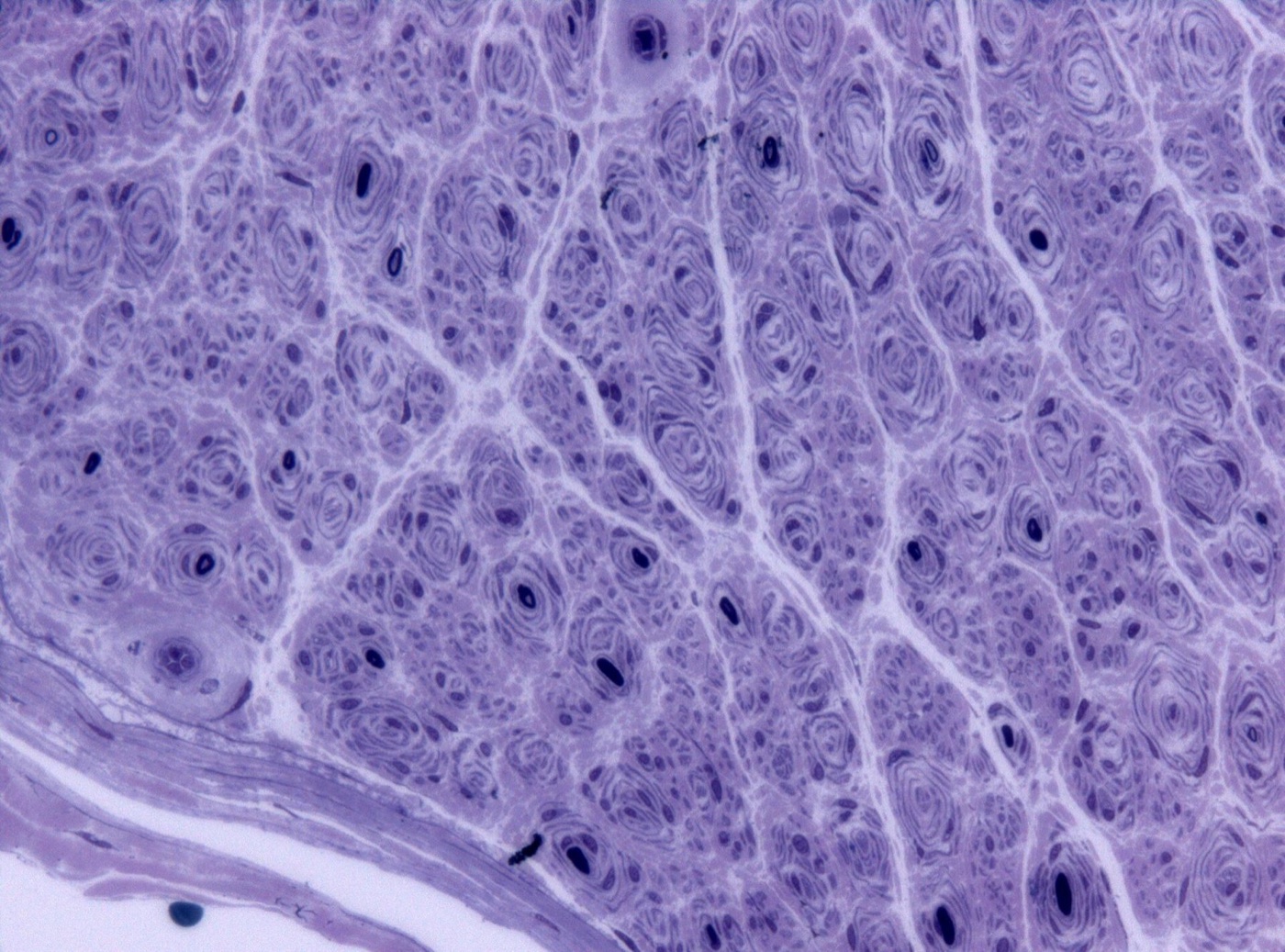
Hereditary vs acquired demyelinating neuropathy: Uniform slowing + no conduction block = hereditary (CMT1). Non-uniform slowing + conduction block + temporal dispersion = acquired (CIDP).
Diabetic Neuropathy Types
- Distal symmetric polyneuropathy — most common; length-dependent, small fiber → large fiber
- Diabetic amyotrophy (lumbosacral radiculoplexopathy) — acute proximal thigh pain + weakness; weight loss; often self-limited
- Autonomic neuropathy — orthostatic hypotension, gastroparesis, erectile dysfunction
- Cranial mononeuropathy — CN III palsy with pupil sparing (vs. aneurysm = pupil involved)
- Mononeuropathy/entrapment — median (CTS), ulnar
- Truncal radiculopathy — band-like thoracoabdominal pain; often misdiagnosed
Other Key Neuropathies
| Syndrome | Key Facts |
| Small fiber neuropathy | Burning pain, autonomic symptoms, NCS normal, diagnose with skin punch biopsy (↓ IENFD); causes: DM, Fabry, amyloid, sarcoid, Sjögren |
| Anti-MAG neuropathy | IgM kappa paraprotein; distal acquired demyelinating; wide-spaced myelin; slowly progressive; poor response to IVIg; rituximab preferred |
| POEMS syndrome | Polyneuropathy, Organomegaly, Endocrinopathy, M-protein (IgA or IgG lambda), Skin changes; sclerotic bone lesions; ↑ VEGF; demyelinating NCS |
| Vasculitic neuropathy | Mononeuritis multiplex; sural nerve biopsy → necrotizing vasculitis; treat with steroids + cyclophosphamide |
| MMN | Pure motor; asymmetric distal UE; anti-GM1 IgM; conduction block on NCS; IVIg works; steroids worsen |
| Amyloid neuropathy | Painful small fiber + autonomic; CTS common; TTR (hATTR) or AL; Congo red → apple-green birefringence |
- POEMS is always IgA or IgG lambda (never kappa); anti-MAG is always IgM kappa
- MMN = IVIg responsive; steroids and PLEX can worsen MMN
- Absent SNAPs in the hands but preserved sural SNAP → think GBS or CIDP, not axonal neuropathy
Mononeuropathies & Entrapment
Upper Extremity Mononeuropathies
| Nerve | Syndrome | Site | Motor Deficit | Sensory Deficit |
| Median | Carpal tunnel | Wrist | APB weakness (thenar atrophy late) | Digits 1–3 + radial half of 4 |
| AIN (anterior interosseous) | Proximal forearm | FPL, FDP (index), PQ — can’t make OK sign | None (pure motor) |
| Pronator syndrome | Proximal forearm | Similar to CTS but includes forearm pronation | Palmar cutaneous branch involved (vs. CTS) |
| Ulnar | Cubital tunnel | Elbow | FDI, ADM, lumbricals 4–5; claw hand (more severe distally) | Digit 5 + ulnar half of 4 |
| Guyon canal | Wrist | Hypothenar + interossei (variable by zone) | Variable; may spare dorsal hand |
| Radial | Saturday night palsy | Spiral groove | Wrist drop + finger drop; spares triceps | Dorsal hand (first web space) |
| PIN (posterior interosseous) | Proximal forearm | Finger drop (no wrist drop — ECRL spared) | None (pure motor) |
Lower Extremity Mononeuropathies
| Nerve | Site | Motor Deficit | Sensory Deficit |
| Common peroneal | Fibular head | Footdrop (dorsiflexion + eversion) | Lateral leg + dorsal foot |
| Femoral | Pelvis/inguinal | Quad weakness; ↓ knee jerk | Anterior thigh + medial leg (saphenous) |
| Lateral femoral cutaneous | Inguinal ligament | None (pure sensory) | Lateral thigh — meralgia paresthetica |
| Sciatic (peroneal division) | Buttock/posterior thigh | Footdrop + hamstring weakness | Below knee (peroneal + tibial) |
| Tibial | Tarsal tunnel | Toe flexion weakness; intrinsic foot muscles | Sole of foot |
Footdrop DDx
| Feature | Common Peroneal | L5 Radiculopathy | Sciatic (peroneal division) |
| Dorsiflexion | Weak | Weak | Weak |
| Eversion | Weak | Weak | Weak |
| Inversion | Normal (tibial nerve) | Weak (tibialis posterior = L5) | Normal or weak |
| Hip abduction | Normal | Weak (gluteus medius = L5) | Normal |
| Knee flexion | Normal | Normal | Weak (hamstrings) |
| Sensory | Dorsal foot + lateral leg | Dorsal foot + lateral leg + medial foot | Entire below-knee |
| EMG clue | NCS abnormal at fibular head | Paraspinal fibs; tibialis posterior involved | Short head biceps femoris involved |
- Footdrop with weak inversion (tibialis posterior) = L5, not peroneal nerve
- AIN = pure motor; can’t pinch (no OK sign); no sensory loss
- Ulnar claw hand paradox: higher lesion = less clawing (FDP paralyzed so MCP not hyperextended)
Radiculopathy & Plexopathy Quick Reference
Cervical Radiculopathy
| Root | Disc | Pain/Sensory | Motor | Reflex |
| C5 | C4–C5 | Lateral shoulder/arm | Deltoid, biceps | ↓ Biceps |
| C6 | C5–C6 | Lateral forearm, thumb, index | Biceps, wrist extensors (brachioradialis) | ↓ Brachioradialis |
| C7 | C6–C7 | Middle finger | Triceps, wrist flexors, finger extensors | ↓ Triceps |
| C8 | C7–T1 | Ring + little finger, medial forearm | Finger flexors, hand intrinsics | ↓ Finger flexor |
| T1 | T1–T2 | Medial arm/forearm | Hand intrinsics (interossei) | None reliable |
Lumbosacral Radiculopathy
| Root | Disc | Pain/Sensory | Motor | Reflex |
| L2–L3 | L2–3/L3–4 | Anterior thigh | Hip flexion (iliopsoas), quad | ↓ (none reliable / patellar) |
| L4 | L3–L4 | Medial leg (saphenous) | Knee extension (quad), tibialis anterior | ↓ Patellar (knee jerk) |
| L5 | L4–L5 | Lateral leg, dorsal foot, great toe | Ankle dorsiflexion, hip abduction, toe extension, inversion | ↓ Medial hamstring (inconsistent) |
| S1 | L5–S1 | Lateral foot, sole, calf | Ankle plantarflexion, eversion, hip extension | ↓ Achilles (ankle jerk) |
Brachial Plexopathy
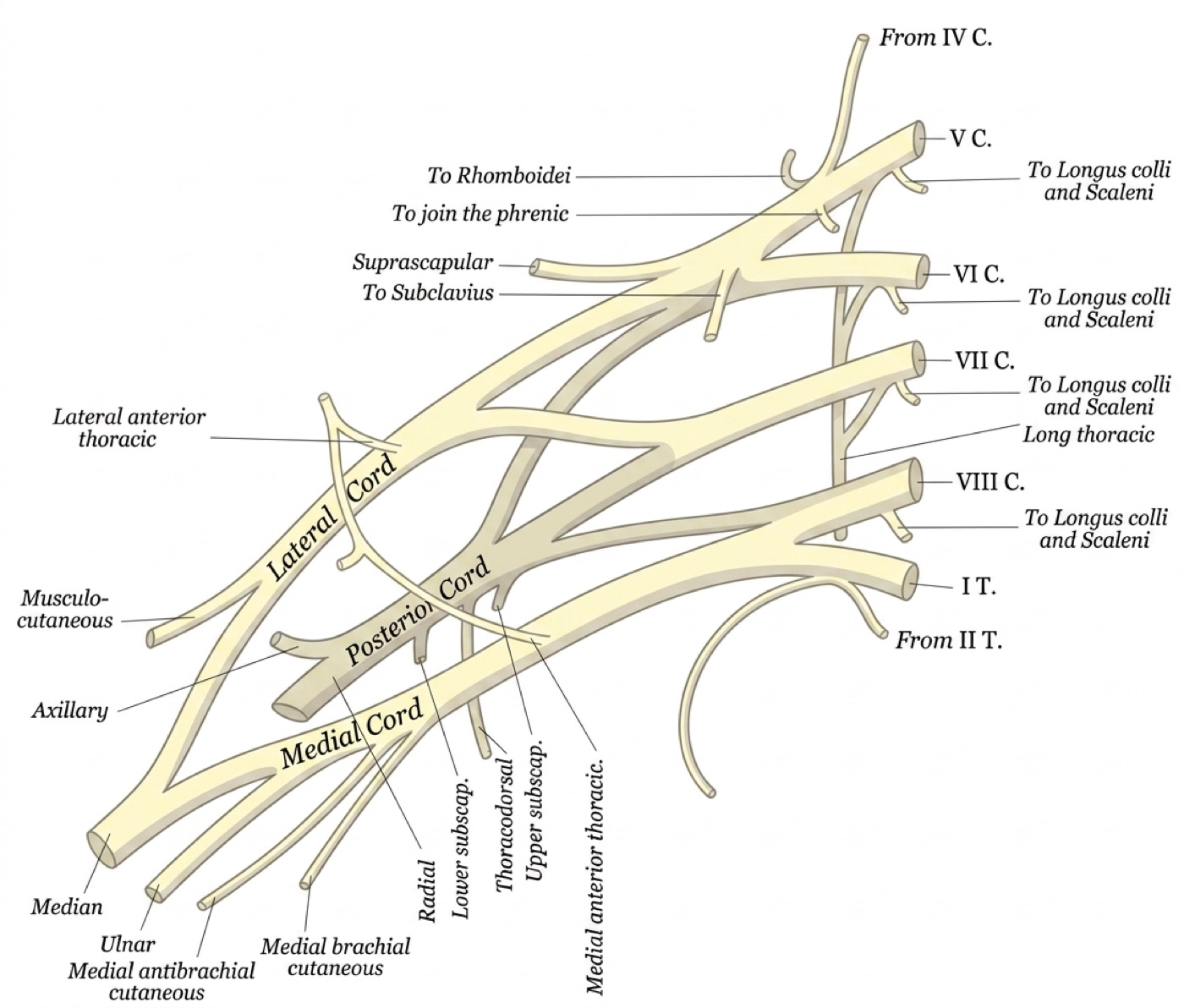
- Erb-Duchenne (upper trunk, C5–C6) — “waiter’s tip”; shoulder abduction + elbow flexion lost; traction/birth injury
- Klumpke (lower trunk, C8–T1) — hand intrinsic weakness + claw hand; may have Horner syndrome (T1 sympathetic); Pancoast tumor
- Parsonage-Turner (neuralgic amyotrophy) — acute shoulder pain → patchy UE weakness; often post-viral; long thoracic nerve (winged scapula) commonly affected
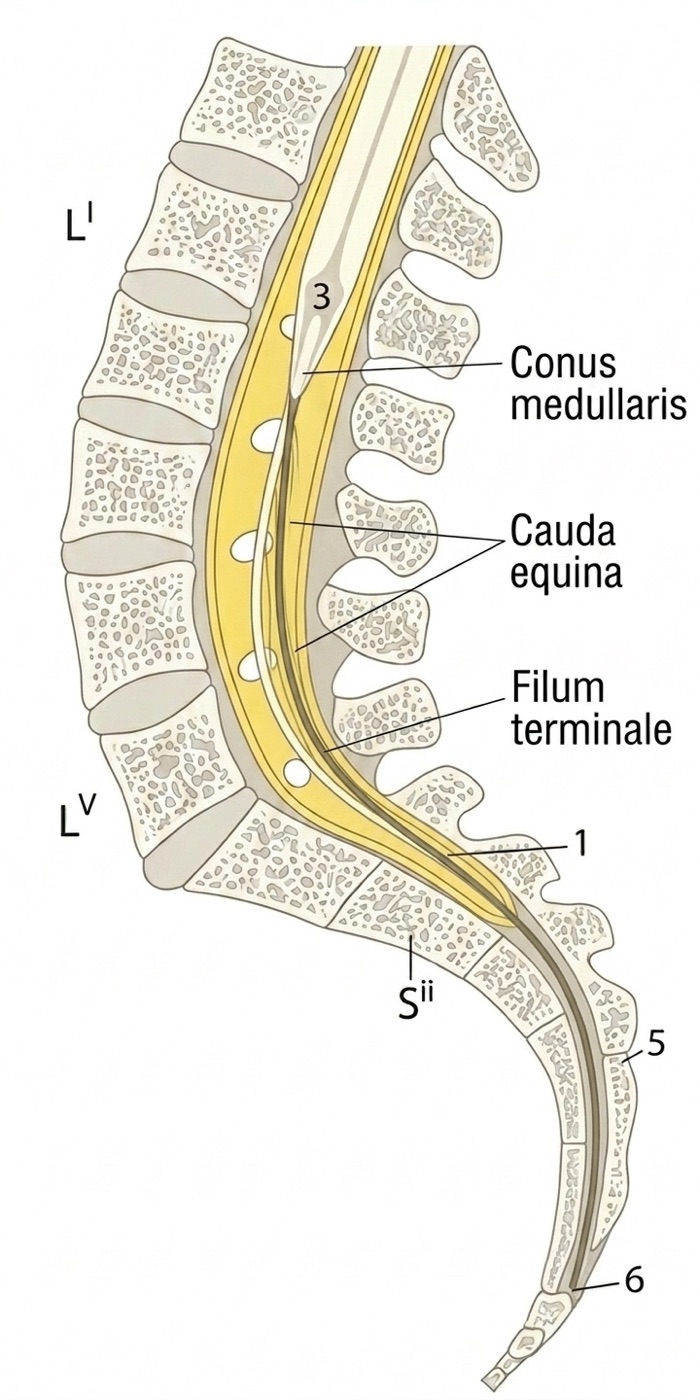
Cauda Equina vs Conus Medullaris
| Feature | Conus Medullaris (S3–S5) | Cauda Equina (L2–S5 roots) |
| Onset | Sudden, bilateral, symmetric | Gradual, unilateral → bilateral |
| Pain | Less prominent | Severe, radicular |
| Weakness | Symmetric; mild; distal LE | Asymmetric; can be severe; multisegmental |
| Sensory | Perianal saddle anesthesia (symmetric) | Asymmetric; radicular distribution |
| Bladder/bowel | Early; prominent | Late (unless severe) |
| Reflexes | Bulbocavernosus absent; may have UMN signs | Absent (LMN); areflexia |
Motor Neuron Disease
ALS Key Facts
- Combined UMN + LMN signs in multiple regions; no sensory loss
- Split hand sign: APB/FDI wasting > hypothenar (ADM) — unique to ALS
- Split leg sign: tibialis anterior (dorsiflexion) weaker than tibialis posterior (inversion)
- Awaji criteria: fasciculation potentials = fibrillations for diagnosis
- El Escorial categories: Definite (3 regions), Probable (2 regions), Possible (1 region with UMN+LMN), Suspected (LMN only in ≥2 regions)
- Riluzole: ↑ survival ~2–3 months; edaravone/AMX0035: modest benefit
- Tofersen: antisense oligonucleotide for SOD1 ALS
ALS Genetics
| Gene | Frequency | Key Feature |
| C9orf72 | Most common familial + sporadic | Hexanucleotide repeat expansion (GGGGCC); ALS + FTD spectrum; TDP-43 + p62 inclusions |
| SOD1 | 20% familial | First ALS gene discovered; tofersen available; misfolded SOD1 protein; typically no FTD |
| TARDBP | ~4% familial | Encodes TDP-43; cytoplasmic TDP-43 inclusions; ALS ± FTD |
| FUS | ~4% familial | Young onset; aggressive; FUS inclusions (NOT TDP-43) |
ALS Mimics
- Cervical myelopathy — UMN in legs + LMN in arms; MRI shows cord compression
- MMN — pure LMN, asymmetric, anti-GM1, conduction block; IVIg responsive
- Kennedy disease (SBMA) — X-linked; CAG repeat in androgen receptor; gynecomastia, perioral fasciculations, elevated CK, slow progression
- Inclusion body myositis — finger flexor + quad weakness; can mimic ALS LMN pattern
- Benign fasciculation syndrome — fasciculations without weakness, atrophy, or EMG denervation
- Hirayama disease — young males; asymmetric hand wasting; cervical flexion myelopathy; non-progressive
SMA Types
| Type | Onset | Max Motor Milestone | SMN2 Copies | Natural History |
| SMA 0 | Prenatal | None | 1 | Death in weeks |
| SMA 1 (Werdnig-Hoffmann) | <6 months | Never sit | 2 | Death <2 years without treatment |
| SMA 2 | 6–18 months | Sit, never walk | 3 | Survive to adulthood; wheelchair-bound |
| SMA 3 (Kugelberg-Welander) | >18 months | Walk independently | 3–4 | Normal lifespan; progressive weakness |
| SMA 4 | Adult | Normal | 4+ | Mild; normal lifespan |
3 FDA-approved treatments: nusinersen (intrathecal ASO), onasemnogene (gene therapy, <2 yrs), risdiplam (oral SMN2 splicing modifier)
- ALS spares: eye movements (CN III/IV/VI), sphincters (Onuf nucleus), and sensory nerves
- Kennedy disease: X-linked, CAG repeat in androgen receptor → gynecomastia + perioral fasciculations + sensory neuropathy; slowly progressive — NOT ALS
- SMA = homozygous SMN1 deletion; SMN2 copy number determines severity
Myasthenia Gravis & NMJ Disorders
MG Antibody Table
| Antibody | Frequency | Clinical Features | Thymus |
| AChR | 85% generalized; 50% ocular | Classic MG; any age; generalized or ocular | Thymoma (10–15%); thymic hyperplasia (60–70%) |
| MuSK | 5–8% | Young women; bulbar-predominant; facial/tongue atrophy; poor response to AChE inhibitors | No thymoma; thymectomy NOT beneficial |
| LRP4 | 1–3% | Milder phenotype; limb-predominant | Rare thymoma |
| Seronegative | 5–10% | Treat as AChR-MG; may have low-affinity AChR or clustered AChR antibodies | Variable |
AChR vs MuSK MG
| Feature | AChR MG | MuSK MG |
| Gender | F > M (young); M > F (late-onset) | F >> M |
| Distribution | Ocular → generalized | Bulbar, facial, neck > limbs |
| Muscle atrophy | Uncommon | Common (tongue, facial) |
| Pyridostigmine | Helpful | Often poorly tolerated / ineffective |
| Thymectomy | Beneficial | NOT beneficial |
| IVIg/PLEX | Effective | PLEX preferred; IVIg less effective |
| Best steroid-sparing agent | Azathioprine, mycophenolate | Rituximab (excellent response) |
| RNS | Proximal muscles | May need facial/trapezius muscles |
MG vs LEMS vs Botulism
| Feature | MG | LEMS | Botulism |
| Target | Postsynaptic (AChR) | Presynaptic (VGCC) | Presynaptic (ACh release) |
| Weakness pattern | Ocular → bulbar → limbs; fatigable | Proximal legs first; improves with activity | Descending: cranial → limbs → respiratory |
| Reflexes | Normal | Absent (facilitation after exercise) | Absent or diminished |
| Autonomic | No | Yes (dry mouth, constipation, erectile dysfunction) | Yes (dilated pupils, constipation, urinary retention) |
| Pupils | Normal | Normal | Dilated, fixed |
| RNS (2–3 Hz) | Decrement >10% | Decrement (low baseline CMAP) | Decrement (low baseline CMAP) |
| High-rate RNS (50 Hz) / post-exercise | No increment | Increment >100% | Increment (mild, 30–60%) |
| Association | Thymoma | SCLC (50–60%) | C. botulinum toxin |
Myasthenic Crisis
- 20/20/20 rule for intubation: FVC <20 mL/kg, NIF <−20 cmH2O, >20% decline from baseline
- Treat with IVIg or PLEX; optimize immunosuppression
- Distinguish myasthenic crisis (undertreated) from cholinergic crisis (overtreated) — both cause weakness; cholinergic adds SLUDGE (salivation, lacrimation, urination, diarrhea, GI cramps, emesis)
Medications to Avoid in MG
| Category | Drugs |
| Antibiotics | Aminoglycosides, fluoroquinolones, macrolides, telithromycin |
| Cardiac | Beta-blockers, calcium channel blockers, procainamide, quinidine |
| Neuromuscular blockers | Succinylcholine (prolonged), non-depolarizing agents (enhanced sensitivity) |
| Other | D-penicillamine (can induce MG), magnesium, botulinum toxin, immune checkpoint inhibitors |
- LEMS: ↑ CMAP >100% after brief exercise (post-exercise facilitation) or high-rate RNS
- Immune checkpoint inhibitors (e.g., nivolumab, pembrolizumab) can cause de novo MG or MG flares
- Ice pack test: improvement of ptosis with ice = positive (cooling reduces AChE activity) — quick bedside test for MG
Inflammatory Myopathies
DM vs PM vs IBM vs IMNM
| Feature | Dermatomyositis | Polymyositis | IBM | IMNM |
| Age | Any (bimodal); children + adults | Adults >18 | >50 years | Any adult |
| Weakness | Proximal, symmetric | Proximal, symmetric | Quad + finger flexors (asymmetric) | Proximal, severe, symmetric |
| CK | ↑↑ (10–50×) | ↑↑ (10–50×) | Normal to mildly ↑ (1–10×) | ↑↑↑ (often >50×) |
| Skin | Gottron papules, heliotrope rash, V-sign, shawl sign | None | None | None |
| Biopsy | Perifascicular atrophy; perivascular CD4+/B cells; complement C5b-9 on capillaries | Endomysial CD8+ T cells invading non-necrotic fibers | Rimmed vacuoles; endomysial CD8+ T cells; congophilic inclusions (amyloid) | Necrotic/regenerating fibers; macrophages; minimal lymphocytes |
| Cancer risk | HIGH (especially TIF1-γ, NXP-2) | Moderate | No | Anti-HMGCR: low; anti-SRP: low |
| Treatment | Steroids + steroid-sparing; IVIg | Steroids + steroid-sparing | Resistant to immunotherapy; IVIg may slow progression | Steroids + IVIg + steroid-sparing |
DM Antibody Table
| Antibody | Association | Key Feature |
| Mi-2 | Classic DM | Good prognosis; classic skin findings; responds well to treatment |
| MDA5 (CADM-140) | Clinically amyopathic DM | Rapidly progressive ILD (can be fatal); minimal weakness; skin ulcers, palmar papules |
| TIF1-γ (p155/140) | Cancer-associated DM | Highest cancer risk (~60%); screen extensively for malignancy; adults |
| NXP-2 (MJ) | Cancer-associated DM; juvenile DM | Calcinosis (children); cancer (adults); edema |
| Jo-1 (+ other antisynthetases) | Antisynthetase syndrome | ILD + arthritis + mechanic’s hands + Raynaud + fever + myositis |
| SAE | DM with dysphagia | Skin-predominant onset → severe dysphagia |
IBM & Antisynthetase One-Liners
- IBM: most common inflammatory myopathy >50 years; finger flexors + quadriceps (asymmetric); rimmed vacuoles + amyloid deposits on biopsy; resistant to immunotherapy; often misdiagnosed as PM that “doesn’t respond to steroids”
- Antisynthetase syndrome: Jo-1 (most common); mechanic’s hands + ILD + non-erosive arthritis + Raynaud + fever + myositis; ILD drives prognosis
- IMNM antibodies: anti-SRP (severe, refractory) and anti-HMGCR (statin-exposed but can occur without statins; very high CK)
- Perifascicular atrophy on biopsy = DM (even without skin findings)
- Rimmed vacuoles on biopsy = IBM
- TIF1-γ or NXP-2 antibody in an adult = mandatory cancer screening
- PM is a diagnosis of exclusion — always rule out IBM, IMNM, and muscular dystrophy first
Muscular Dystrophies
DMD vs BMD
| Feature | DMD | BMD |
| Gene/Protein | Dystrophin absent (out-of-frame deletion) | Dystrophin reduced/abnormal (in-frame deletion) |
| Onset | 2–5 years | 5–15 years |
| Wheelchair | By age 12 | After age 16 (variable) |
| Cardiac | Dilated cardiomyopathy (by teens) | Cardiomyopathy (may precede skeletal weakness) |
| Cognition | ↓ IQ (~1 SD below mean); 30% cognitive impairment | Usually normal |
| Lifespan | 20s–30s without intervention | 40s–50s+ |
| CK | Massively elevated (10,000–50,000+) | Elevated (5,000–20,000) |
DM1 vs DM2
| Feature | DM1 (Steinert) | DM2 (PROMM) |
| Gene | DMPK (CTG repeat, chr 19) | CNBP/ZNF9 (CCTG repeat, chr 3) |
| Inheritance | AD; anticipation | AD; minimal anticipation |
| Weakness | Distal (grip, ankle dorsiflexion); facial | Proximal (hip flexors, thighs) |
| Myotonia | Prominent (grip, percussion) | Milder, often subclinical |
| Congenital form | Yes (severe, maternal inheritance) | No |
| Cardiac | Conduction defects (heart block); sudden death | Arrhythmias (less severe) |
| Other | Cataracts, frontal balding, daytime somnolence, insulin resistance, testicular atrophy | Cataracts, myalgia (pain more prominent than weakness) |
High-Yield Dystrophy Table
| Dystrophy | Gene/Protein | Inheritance | Unique Feature |
| DMD | Dystrophin (absent) | XR | Gowers sign; calf pseudohypertrophy; wheelchair by 12 |
| BMD | Dystrophin (reduced) | XR | Milder DMD; cardiomyopathy may precede weakness |
| DM1 | DMPK (CTG) | AD | Distal weakness + myotonia + cardiac conduction + cataracts + anticipation |
| DM2 | CNBP (CCTG) | AD | Proximal weakness + pain-predominant + no congenital form |
| FSHD | DUX4 (D4Z4 contraction, chr 4) | AD | Face → shoulder → hip; asymmetric; scapular winging; can’t whistle/drink through straw |
| LGMD | Multiple (sarcoglycans, calpain, dysferlin, etc.) | AR (most) or AD | Proximal limb-girdle pattern; “dystrophin-minus” on biopsy panel guides subtyping |
| EDMD | Emerin (XR) or Lamin A/C (AD) | XR or AD | Early contractures (elbows, Achilles, neck extensors) + cardiac conduction defects; humeroperoneal weakness |
| OPMD | PABPN1 (GCG repeat) | AD | Onset >40 years; ptosis + dysphagia; French-Canadian heritage; NO diplopia (vs. MG) |
- Frame-shift rule: out-of-frame dystrophin deletion → DMD; in-frame → BMD
- DM1 “Christmas tree cataracts” (multicolored iridescent posterior subcapsular) are pathognomonic
- FSHD: retinal telangiectasias (Coats disease) + high-frequency hearing loss are associated features
- EDMD: always screen for cardiac conduction defects — pacemaker/ICD may be needed before significant weakness develops
Channelopathies & Metabolic Myopathies
Periodic Paralysis
| Feature | HypoKPP | HyperKPP | Andersen-Tawil |
| Gene | CACNA1S (70%), SCN4A (10%) | SCN4A | KCNJ2 (Kir2.1) |
| K+ during attack | Low (<3.5) | High (>5.0) or normal | Low, high, or normal |
| Triggers | Carbs, rest after exercise, insulin, stress | Fasting, rest after exercise, cold, K+ load | Variable |
| Attack duration | Hours to days | Minutes to hours (shorter) | Hours to days |
| Myotonia | No | Yes (lid lag, grip myotonia) | No |
| Unique features | Most common PP; severe attacks; vacuolar myopathy long-term | Earlier onset; milder attacks; may have paradoxical myotonia | Cardiac arrhythmias (prolonged QT, bidirectional VT) + dysmorphic features (low-set ears, hypertelorism, clinodactyly) |
| Prevention | Acetazolamide; avoid carbs | Acetazolamide or dichlorphenamide; avoid fasting/cold | Acetazolamide; cardiac monitoring |
Metabolic Myopathies
| Disease | Enzyme/Defect | Key Feature | Diagnostic Clue |
| McArdle (GSD V) | Myophosphorylase | Exercise intolerance + contractures + “second wind” phenomenon; rhabdomyolysis risk | No lactate rise on forearm exercise test; ↑ CK; ↑ ammonia |
| CPT II deficiency | CPT II (fatty acid transport) | Recurrent rhabdomyolysis triggered by prolonged exercise, fasting, illness, cold | Most common cause of recurrent rhabdomyolysis in young adults; acylcarnitine profile abnormal |
| Pompe (GSD II) | Acid maltase (GAA) | Infantile: cardiomegaly + hypotonia + macroglossia; Late-onset: proximal + respiratory weakness (diaphragm early) | Dried blood spot GAA enzyme; ERT available (alglucosidase alfa) |
| Acid maltase (late-onset) | GAA (partial deficiency) | Adult limb-girdle weakness + early respiratory failure; mimics LGMD or PM | Diaphragm weakness out of proportion to limb weakness; ↑ CK (mild); vacuolar myopathy |
Mitochondrial Myopathy Syndromes
| Syndrome | Mutation | Key Features | Board Clue |
| MELAS | m.3243A>G (tRNALeu) | Stroke-like episodes (not vascular territory); seizures; lactic acidosis; short stature; DM | Young patient + “stroke” not following vascular territory + ↑ lactate |
| MERRF | m.8344A>G (tRNALys) | Myoclonus epilepsy; ataxia; ragged red fibers; lipomas | Myoclonus + ataxia + ragged red fibers |
| CPEO/KSS | Large mtDNA deletions | CPEO: progressive ptosis + ophthalmoplegia; KSS adds: cardiac conduction block + retinitis pigmentosa + onset <20 | Bilateral ptosis + ophthalmoplegia WITHOUT diplopia; if onset <20 with heart block → KSS |
| NARP | m.8993T>G (ATP6) | Neuropathy, ataxia, retinitis pigmentosa | Higher mutation load → Leigh syndrome (infantile) |
Malignant hyperthermia: RYR1 mutation (AD); triggered by inhaled anesthetics (halothane, sevoflurane) + succinylcholine; treat with dantrolene; associated with central core disease
- McArdle: “second wind” = exercise tolerance improves after 10 minutes (switch to fatty acid metabolism)
- CPT II: rhabdomyolysis triggered by prolonged exercise (not brief); contrast with McArdle (triggered by brief intense exercise)
- KSS = CPEO + cardiac block + retinitis pigmentosa + onset <20 — mandatory cardiac monitoring
- Ragged red fibers (Gomori trichrome) = mitochondrial myopathy hallmark
Neuromuscular Emergencies
GBS Intubation Criteria
- 20/30/40 rule: FVC <20 mL/kg, NIF <−30 cmH2O, >30% decline from baseline — prepare for intubation
- FVC <15 mL/kg or NIF <−20 cmH2O → intubate
- Other red flags: rapid progression, bilateral facial weakness, autonomic instability, inability to count to 20 in one breath
- Do NOT rely on SpO2 alone — desaturation is a late finding in neuromuscular respiratory failure
CIP vs CIM
| Feature | CIP (Critical Illness Polyneuropathy) | CIM (Critical Illness Myopathy) |
| Pathology | Axonal sensorimotor polyneuropathy | Thick filament (myosin) loss myopathy |
| NCS | ↓ CMAP + ↓ SNAP amplitudes | ↓ CMAP amplitudes; SNAPs normal |
| EMG | Fibrillations; neurogenic MUAPs | Fibrillations; myopathic MUAPs (or inexcitable muscle on direct stimulation) |
| CK | Normal or mildly elevated | Elevated (may be very high) |
| Sensory | Impaired | Normal |
| Risk factors | Sepsis, SIRS, multiorgan failure | Steroids + neuromuscular blocking agents; sepsis |
| Prognosis | Slower recovery; may be incomplete | Generally better prognosis; faster recovery |
Acute Flaccid Paralysis DDx
| Diagnosis | Pattern | Reflexes | Sensory | CSF | Key Distinguisher |
| GBS | Ascending, symmetric | Absent | ± (paresthesias) | High protein, normal cells | Post-infectious; NCS demyelinating |
| Transverse myelitis | Level; bilateral LE > UE | Initially absent → UMN later | Sensory level | Pleocytosis | Bladder involvement early; MRI cord lesion |
| Poliomyelitis/AFM | Asymmetric; LMN only | Absent | Normal | Pleocytosis | Anterior horn cell destruction; MRI anterior horn signal |
| Botulism | Descending; cranial → limbs | Absent | Normal | Normal | Dilated pupils; autonomic; contaminated food/wound |
| Tick paralysis | Ascending; mimics GBS | Absent | Normal | Normal | Find and remove tick → rapid recovery |
| Hypokalemia | Proximal > distal | Decreased | Normal | Normal | K+ low; ECG changes; rapid resolution with K+ replacement |
| West Nile virus | Asymmetric LMN (like polio) | Absent | Normal | Pleocytosis | Older adults; encephalitis + AFP; IgM in CSF |
Toxin Comparison
| Feature | Botulism | Organophosphate | Tick Paralysis |
| Mechanism | Blocks ACh release (presynaptic) | AChE inhibitor (excess ACh) | Blocks ACh release (presynaptic) |
| Pattern | Descending paralysis | Cholinergic crisis (SLUDGE + weakness) | Ascending paralysis (mimics GBS) |
| Pupils | Dilated, fixed | Miotic (pinpoint) | Normal |
| NCS/EMG | Low CMAPs; incremental response | Repetitive CMAPs after single stimulus | Low CMAPs; may have decremental response |
| Treatment | Antitoxin + supportive | Atropine + pralidoxime (2-PAM) | Remove tick → rapid recovery |
- CIM: SNAPs are normal (pure myopathy); CIP: SNAPs are reduced (neuropathy with sensory involvement)
- Tick paralysis mimics GBS perfectly — always do a thorough scalp/skin exam in any ascending paralysis
- Organophosphate: pinpoint pupils + SLUDGE + fasciculations (excess ACh at all receptors)
EMG/NCS Patterns
Neurogenic vs Myopathic MUAPs
| Parameter | Neurogenic | Myopathic |
| Duration | ↑ (long) | ↓ (short) |
| Amplitude | ↑ (large) | ↓ (small) |
| Phases | Polyphasic (reinnervation) | Polyphasic (fiber variability) |
| Recruitment | Reduced (fewer MUAPs firing fast) | Early (many small MUAPs at low force) |
| Fibrillations/PSWs | Present (active denervation) | Present in inflammatory/necrotic myopathies |
| Fasciculations | May be present (ALS, radiculopathy) | Absent |
RNS Patterns
| Condition | Baseline CMAP | 2–3 Hz RNS | High-rate RNS / Post-exercise |
| MG | Normal | Decrement >10% | No significant increment; post-exercise repair (transient normalization then fatigue) |
| LEMS | Low | Decrement | Increment >100% (pathognomonic) |
| Botulism | Low | Decrement | Mild increment (30–60%) |
EMG Pattern Recognition by Disease
| Disease | NCS | Needle EMG | Special Finding |
| ALS | Normal SNAPs; low CMAPs | Widespread fibrillations + fasciculations + neurogenic MUAPs | Split hand (APB > ADM); ongoing denervation + reinnervation |
| GBS (AIDP) | Prolonged DL, slow CV, CB, sural sparing | Fibrillations if axonal loss (late) | Sural sparing pattern |
| CIDP | Demyelinating (slow CV, prolonged DL, CB, temporal dispersion) | Variable denervation | Non-uniform slowing; acquired pattern |
| CMT1A | Uniform slowing (<38 m/s); no CB | Chronic neurogenic changes | Uniform slowing WITHOUT conduction block = hereditary |
| MMN | Motor CB without sensory involvement | Neurogenic in CB distribution | Conduction block in non-entrapment sites; SNAPs normal |
| MG | Normal; RNS decrement | Variability in MUAP morphology (moment-to-moment) | Jitter on single-fiber EMG (most sensitive test) |
| Myotonic dystrophy | May be normal or mild neuropathy | Myotonic discharges (“dive bomber”) | Waxing-waning myotonic runs |
| IBM | Normal or mild neuropathy | Mixed neurogenic + myopathic (long + short MUAPs) | Mixed pattern in quad + finger flexors is classic |
| DM/PM/IMNM | Normal | Fibrillations + myopathic MUAPs | Irritable myopathy (fibs + PSWs in inflammatory/necrotic) |
Top EMG Pitfalls
- Normal NCS does not exclude myopathy — NCS tests nerve, not muscle; CMAPs may be low in severe myopathy
- Fibrillations are not specific to neuropathy — also seen in inflammatory myopathies, muscular dystrophies, and NMJ disorders
- Single-fiber EMG is the most sensitive test for MG but is not specific (abnormal in any NMJ or neurogenic disorder)
- Myotonic discharges without clinical myotonia can occur in: acid maltase deficiency (Pompe), hypothyroid myopathy, statin myopathy, channelopathies
- IBM has “mixed” EMG pattern (neurogenic + myopathic MUAPs) — can be misread as neurogenic alone
- Temperature matters: cold limb → falsely slow CV + falsely high amplitude; warm limb before testing
- LEMS increment >100% on post-exercise facilitation or 50 Hz RNS is pathognomonic
- “Dive bomber” sound on EMG = myotonic discharge = waxing-waning frequency and amplitude
- Single-fiber EMG: most sensitive for MG (95%+); increased jitter + blocking
High-Yield One-Liners
- GBS: treat with IVIg or PLEX — steroids are NOT effective; do NOT combine IVIg + PLEX (no added benefit)
- CIDP: unlike GBS, steroids DO work — along with IVIg and PLEX
- MFS antibody: anti-GQ1b = ophthalmoplegia + ataxia + areflexia (triad)
- Sural sparing pattern on NCS (absent median/ulnar SNAPs but preserved sural) = AIDP until proven otherwise
- POEMS: always lambda light chain; ↑ VEGF; look for sclerotic bone lesions on skeletal survey
- Anti-MAG neuropathy: IgM kappa; wide-spaced myelin; distal acquired demyelinating; poor IVIg response; use rituximab
- MMN: anti-GM1 + conduction block; responds to IVIg; steroids WORSEN it
- ALS split hand: APB/FDI wasting out of proportion to hypothenar — distinguishes ALS from cervical myelopathy
- Kennedy disease: X-linked, CAG repeat (androgen receptor); gynecomastia + perioral fasciculations + sensory neuropathy — slow course
- MuSK MG: bulbar > ocular; tongue atrophy; rituximab is best steroid-sparing agent; pyridostigmine often worsens
- IBM: most common inflammatory myopathy after age 50; quad + finger flexors; resistant to steroids; rimmed vacuoles on biopsy
- TIF1-γ antibody in DM: highest cancer risk — screen for occult malignancy
- MDA5 antibody DM: rapidly progressive ILD with minimal/no weakness (amyopathic DM); high mortality
- McArdle disease: “second wind” phenomenon; no rise in lactate on forearm exercise test
- Malignant hyperthermia: RYR1 mutation; inhaled anesthetics + succinylcholine trigger; treat with dantrolene
- DM1 anticipation: CTG repeat expands each generation; congenital DM1 inherited from MOTHER
- DMD frame rule: out-of-frame dystrophin deletion = DMD (severe); in-frame = BMD (milder)
- Footdrop with weak inversion = L5 radiculopathy (tibialis posterior), NOT peroneal neuropathy
- CIM vs CIP: SNAPs normal in CIM (myopathy spares sensory nerves); SNAPs reduced in CIP
- Tick paralysis: ascending paralysis mimicking GBS; CSF is normal; remove tick → rapid resolution