Clinical Vascular

Venous Thrombosis

Cerebral Venous Thrombosis

What Do You Need to Know?

  • Cerebral venous anatomy — dural sinuses, superficial cortical veins, and deep venous system drainage patterns
  • Risk factors: prothrombotic states, OCPs, pregnancy/postpartum, infections, malignancy — and how to work them up
  • Two mechanisms of injury: venous outflow obstruction with vasogenic edema/hemorrhage AND impaired CSF absorption causing raised ICP
  • Clinical syndromes by location — SSS (bilateral parasagittal), transverse/sigmoid (pseudotumor pattern), cavernous sinus (painful ophthalmoplegia), deep venous (bilateral thalamic involvement, coma)
  • Imaging: dense triangle sign, cord sign, empty delta sign on contrast CT; MRV/CTV as confirmatory studies; MRI signal changes vary with thrombus age
  • Treatment: anticoagulation with heparin EVEN with hemorrhagic infarction (critical board point), duration of anticoagulation, and role of endovascular therapy
  • Special scenarios: CVT in pregnancy (LMWH), VITT (avoid heparin, use non-heparin anticoagulants), and infectious cavernous sinus thrombosis
  • Prognosis is generally favorable (mortality 5–10%), but deep venous system involvement, coma, and malignancy predict poor outcomes
Cerebral Venous Anatomy

Dural Venous Sinuses
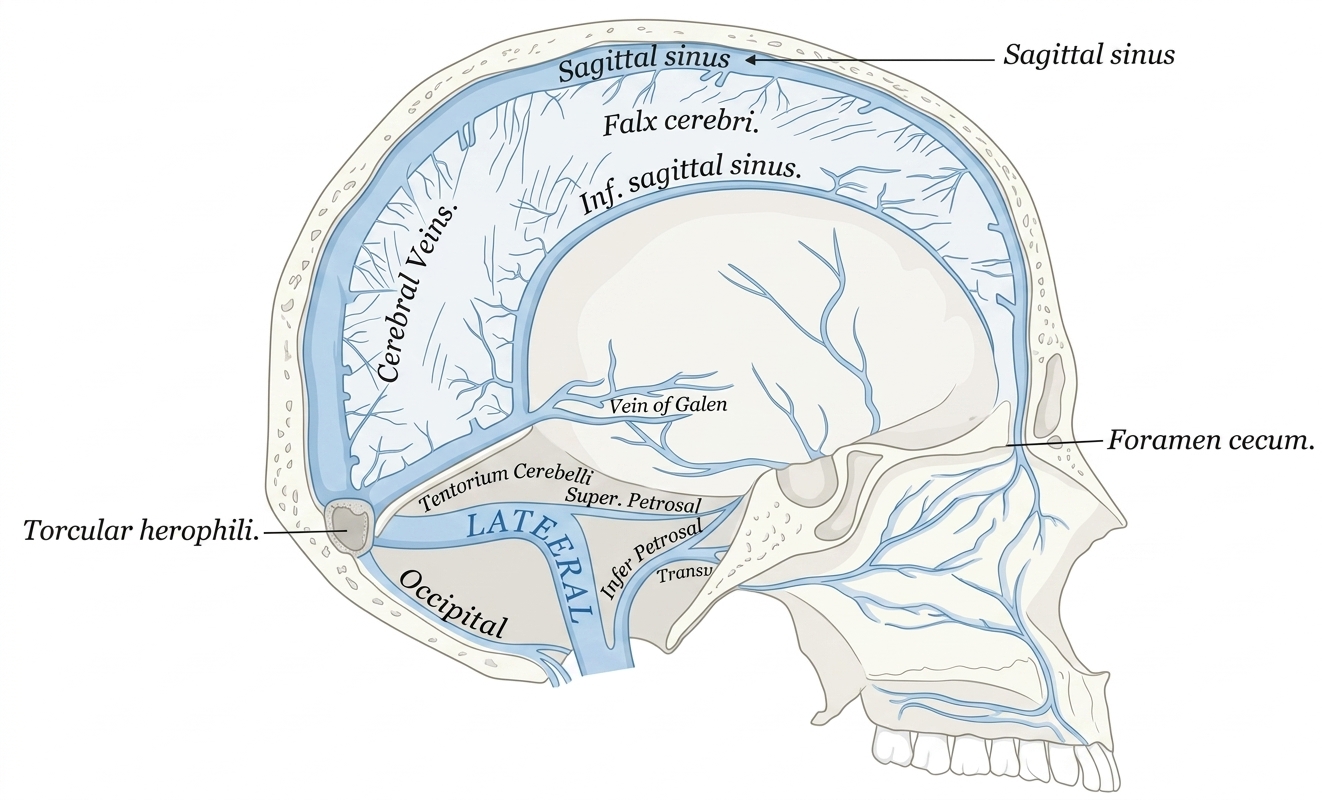
  • Superior Sagittal Sinus (SSS): Runs along the superior margin of the falx cerebri from the crista galli to the confluence of sinuses (torcular Herophili) → receives drainage from superficial cortical veins and arachnoid granulations (site of CSF absorption)
  • Inferior Sagittal Sinus (ISS): Runs along the inferior free edge of the falx cerebri → joins the vein of Galen to form the straight sinus
  • Straight Sinus: Formed by the junction of the ISS and the vein of Galen → runs posteriorly along the junction of the falx and tentorium → drains into the confluence of sinuses
  • Transverse Sinuses: Paired sinuses running laterally from the confluence along the attachment of the tentorium → the right transverse sinus is typically dominant (receives most SSS flow); the left receives most straight sinus flow
  • Sigmoid Sinuses: S-shaped continuation of the transverse sinuses → course inferiorly along the posterior petrous bone → drain into the internal jugular veins at the jugular foramen
  • Cavernous Sinuses: Paired sinuses flanking the sella turcica → contain the internal carotid artery and CN VI within the sinus; CN III, IV, V1, V2 course through the lateral wall → receive drainage from the superior and inferior ophthalmic veins, superficial middle cerebral vein, and sphenoparietal sinus → drain posteriorly into the superior and inferior petrosal sinuses
  • Confluence of Sinuses (Torcular Herophili): Junction of SSS, straight sinus, and occipital sinus near the internal occipital protuberance → highly variable anatomy; true symmetric confluence occurs in only ~25% of individuals

Superficial Cortical Veins

  • Superficial middle cerebral vein (vein of Sylvius): Runs along the Sylvian fissure → drains into the cavernous sinus or sphenoparietal sinus
  • Vein of Trolard (superior anastomotic vein): Connects the superficial middle cerebral vein to the SSS → runs over the parietal convexity — largest of the anastomotic veins
  • Vein of Labbé (inferior anastomotic vein): Connects the superficial middle cerebral vein to the transverse sinus → runs over the temporal lobe
  • Superficial cortical veins drain the cortical surface and empty into the SSS, transverse sinus, or cavernous sinus — variable anatomy with extensive anastomoses explains why isolated cortical vein thrombosis may be clinically silent

Deep Venous System

  • Internal cerebral veins (paired): Run in the roof of the third ventricle → drain the deep white matter, basal ganglia, and thalami
  • Basal vein of Rosenthal (paired): Courses around the midbrain from anteromedial (near the anterior perforated substance) to posterosuperior → drains the medial temporal lobe, basal ganglia, and midbrain
  • Vein of Galen (great cerebral vein): Formed by the union of the two internal cerebral veins (and receives the basal veins of Rosenthal) beneath the splenium of the corpus callosum → drains into the straight sinus
  • Deep venous system thrombosis produces bilateral thalamic involvement — a critical imaging and clinical clue
💎 Board Pearl

The SSS is the most commonly thrombosed sinus (~60–70%). Arachnoid granulations along the SSS are the primary site of CSF absorption — SSS thrombosis impairs CSF reabsorption, causing raised ICP that mimics idiopathic intracranial hypertension. Deep venous system thrombosis (internal cerebral veins, vein of Galen, straight sinus) produces bilateral thalamic edema/infarction and carries the worst prognosis.

Epidemiology & Risk Factors

Demographics

  • Incidence: ~1.3–1.6 per 100,000 per year; likely underdiagnosed
  • Age: Median age ~30–40 years — much younger than arterial stroke
  • Sex: Female predominance (~3:1) due to hormonal risk factors (OCPs, pregnancy)
  • Accounts for 0.5–1% of all strokes
  • In neonates and children, CVT is a recognized cause of stroke — often related to dehydration, infection, or perinatal complications

Prothrombotic States

Acquired

  • Oral contraceptive pills (OCPs): Most common identifiable risk factor in young women — risk increases 5–6-fold; synergistic with inherited thrombophilias (e.g., Factor V Leiden + OCPs → 30-fold increased risk)
  • Pregnancy and postpartum period: Risk highest in the third trimester and first 6 weeks postpartum; ~12 per 100,000 deliveries
  • Antiphospholipid syndrome: Lupus anticoagulant, anticardiolipin antibodies, anti-β2 glycoprotein I — screen all CVT patients
  • Malignancy: Especially hematologic (polycythemia vera, essential thrombocythemia, leukemia) and solid tumors (brain tumors, adenocarcinomas)
  • Inflammatory bowel disease (IBD): Ulcerative colitis and Crohn’s disease — both arterial and venous thrombosis risk
  • Nephrotic syndrome: Loss of antithrombin III in urine → hypercoagulable state
  • Heparin-induced thrombocytopenia (HIT): Paradoxical thrombosis with falling platelets
  • Myeloproliferative neoplasms: JAK2 V617F mutation — consider even without overt hematologic abnormalities
  • Paroxysmal nocturnal hemoglobinuria (PNH): Rare but associated with unusual site thrombosis including CVT

Inherited

  • Factor V Leiden mutation: Most common inherited thrombophilia (~5% of Caucasians); activated protein C resistance
  • Prothrombin gene mutation (G20210A): Second most common; elevated prothrombin levels
  • Protein C deficiency: Autosomal dominant; homozygous → neonatal purpura fulminans
  • Protein S deficiency: Cofactor for protein C
  • Antithrombin III deficiency: Highest thrombotic risk among inherited thrombophilias
  • Hyperhomocysteinemia: MTHFR mutations; treat with folate, B6, B12

Local & Infectious Causes

  • Mastoiditis/otitis media: Classic cause of transverse/sigmoid sinus thrombosis — direct spread from infected mastoid air cells
  • Sinusitis (especially sphenoid, ethmoid): Risk factor for cavernous sinus thrombosis
  • Meningitis: Bacterial meningitis can cause secondary sinus thrombosis
  • Facial/periorbital infections: “Danger triangle of the face” (nose/upper lip) → venous drainage via angular/ophthalmic veins into cavernous sinus
  • Head trauma and neurosurgery: Direct injury to sinuses or compression
  • Lumbar puncture: Rare but reported, especially with low-pressure states

Medications

  • OCPs and hormone replacement therapy — estrogen-containing formulations carry highest risk
  • L-asparaginase: Used in ALL chemotherapy → depletes antithrombin III, protein C, protein S
  • Tamoxifen: Estrogen receptor modulator with prothrombotic effects
  • Erythropoiesis-stimulating agents
  • Immune checkpoint inhibitors: Emerging association
🧪 Thrombophilia Workup
  • All CVT patients should undergo thrombophilia screening — especially if unprovoked or recurrent
  • Test for: Factor V Leiden, prothrombin G20210A, protein C/S levels, antithrombin III, antiphospholipid antibodies (lupus anticoagulant, anticardiolipin, anti-β2 GPI), homocysteine
  • Timing: Protein C, protein S, and antithrombin III are best measured ≥2 weeks after acute event and off anticoagulation — acute thrombosis and heparin/warfarin alter levels
  • Screen for JAK2 V617F if CBC suggests myeloproliferative neoplasm (elevated Hgb, platelets, or WBC)
  • In ~15% of cases, no risk factor is identified despite extensive workup
💎 Board Pearl

OCPs + Factor V Leiden = 30-fold increased CVT risk. Always ask about OCP use in any young woman with headache, papilledema, or seizures. Mastoiditis classically causes transverse/sigmoid sinus thrombosis. L-asparaginase depletes natural anticoagulants (antithrombin III, protein C, protein S) and is a high-yield drug association for CVT in ALL patients.

Pathophysiology

Two Mechanisms of Injury

Mechanism 1: Venous Outflow Obstruction

  • Thrombosis of a dural sinus or cortical vein → increased venous pressure in upstream veins and capillaries
  • Elevated capillary pressure → vasogenic edema (disruption of the blood-brain barrier)
  • If venous pressure exceeds capillary wall integrity → diapedesis of red blood cells → petechial hemorrhage → frank hemorrhagic infarction
  • Venous infarcts are fundamentally different from arterial infarcts:
    • More likely to be hemorrhagic (~40% present with hemorrhage)
    • Do NOT follow arterial territories — this is a critical imaging clue
    • May be bilateral or parasagittal (e.g., bilateral parasagittal hemorrhages in SSS thrombosis)
    • Surrounding vasogenic edema may be reversible with treatment (unlike cytotoxic edema in arterial stroke)

Mechanism 2: Impaired CSF Absorption

  • CSF is absorbed through arachnoid granulations that protrude into the SSS and lateral lacunae
  • SSS thrombosis → elevated venous pressure in the sinus → impaired pressure gradient for CSF absorption → raised intracranial pressure (ICP)
  • This mechanism explains the “pseudotumor cerebri” presentation — headache, papilledema, visual obscurations, CN VI palsy — WITHOUT focal parenchymal lesions
  • All patients presenting with “idiopathic intracranial hypertension” should have CVT excluded with MRV/CTV before the diagnosis of IIH is made
💎 Board Pearl

Hemorrhagic infarcts that do NOT follow arterial territories = think CVT. Bilateral parasagittal hemorrhages are virtually diagnostic of SSS thrombosis. Venous infarcts are often hemorrhagic (~40%), reversible with anticoagulation, and associated with surrounding vasogenic (not cytotoxic) edema. Always rule out CVT before diagnosing IIH.

Clinical Presentation

General Features

  • CVT is the “great mimicker” — highly variable presentation; must maintain a high index of suspicion
  • Onset is typically subacute (days to weeks) — unlike arterial stroke which is hyperacute (seconds to minutes)
  • Acute onset in ~30%, subacute in ~50%, chronic (>30 days) in ~20% of cases

Most Common Symptoms

  • Headache: ~90% — the most common symptom; often severe, progressive, and unlike the patient’s usual headaches; may worsen with Valsalva or recumbency
  • Seizures: ~40% — much higher than arterial stroke (~5%); focal or generalized; may be the presenting symptom
  • Focal neurological deficits: ~40–50% — hemiparesis, aphasia, hemianopia; depends on location of venous infarction
  • Papilledema: ~30–40% — due to raised ICP; bilateral disc edema on fundoscopy
  • Visual obscurations: Transient visual blurring lasting seconds, precipitated by position change or Valsalva
  • Altered consciousness: ~15–20% — ranges from lethargy to coma; suggests extensive thrombosis or deep venous involvement
  • CN VI palsy: False localizing sign of raised ICP — long intracranial course makes it vulnerable to stretch
🧪 Key Clinical Clues to Suspect CVT
  • Young patient (especially woman on OCPs or peripartum) with new severe headache
  • Stroke-like presentation that does NOT follow an arterial territory
  • Hemorrhagic infarction in a young patient without hypertension or amyloid angiopathy
  • Seizures + headache + focal deficit — this triad is unusual in arterial stroke but common in CVT
  • Bilateral or parasagittal lesions
  • Presentation mimicking idiopathic intracranial hypertension (headache, papilledema, CN VI palsy)
  • Thunderclap headache (less common, but CVT is in the differential alongside SAH)
Clinical Syndromes by Location
Location Clinical Features Key Clues
Superior Sagittal Sinus Headache, seizures (often bilateral), bilateral parasagittal deficits, bilateral leg weakness (parasagittal motor cortex), raised ICP Bilateral leg weakness mimicking spinal cord lesion; bilateral parasagittal hemorrhages on imaging; most commonly thrombosed sinus
Transverse / Sigmoid Sinus Headache (most common), papilledema, isolated raised ICP (pseudotumor pattern), ipsilateral ear/mastoid pain, pulsatile tinnitus May mimic IIH perfectly; associated with mastoiditis/otitis; left transverse sinus often non-dominant → thrombosis may be incidentally found
Cavernous Sinus Orbital/retro-orbital pain, proptosis, chemosis (conjunctival edema), ptosis, ophthalmoplegia (CN III, IV, VI), facial sensory loss (V1, V2), decreased visual acuity Painful ophthalmoplegia = cavernous sinus until proven otherwise; may be bilateral due to intercavernous connections; infectious cause requires urgent antibiotics
Deep Venous System
(Internal cerebral veins, vein of Galen, straight sinus)
Bilateral thalamic edema/infarction, altered consciousness progressing to coma, memory impairment, vertical gaze palsy, bilateral motor deficits Bilateral thalamic T2/FLAIR hyperintensity on MRI is the hallmark; carries the worst prognosis; may mimic “top of the basilar” syndrome or deep artery of Percheron infarction
Isolated Cortical Vein Focal seizures (often motor), localized headache, focal neurological deficit corresponding to the affected cortical region May occur WITHOUT sinus involvement; often subtle on imaging; “cord sign” (hyperdense cortical vein on NCCT)
💎 Board Pearl

Bilateral thalamic lesions on MRI: think deep venous system CVT (internal cerebral veins → vein of Galen → straight sinus). The differential includes artery of Percheron infarction (single perforator from P1 supplying bilateral thalami) and “top of the basilar” syndrome. Deep CVT carries the worst prognosis with high mortality. Cavernous sinus thrombosis presents with painful ophthalmoplegia — always consider infectious etiology (sinusitis, facial abscess) requiring emergent antibiotics.

Imaging

Non-Contrast CT (NCCT)

  • Dense triangle sign: Hyperdense (bright white) SSS on axial CT — represents acute thrombus within the sinus; seen in ~25% of cases
  • Cord sign: Hyperdense cortical vein — linear hyperdensity along the cortical surface representing thrombosed cortical vein
  • Hemorrhagic infarct NOT in an arterial territory: Parasagittal, bilateral, or temporal lobe hemorrhage in an atypical distribution
  • NCCT is normal in up to 30% of CVT cases — a normal CT does NOT rule out CVT
  • Sensitivity of NCCT alone is only ~30–40%

Contrast-Enhanced CT

  • Empty delta sign: On contrast CT, the thrombus within the SSS does NOT enhance, but the surrounding dural walls enhance → creates a triangular filling defect (the “delta”) with enhancing rim — seen in ~25–30% of cases
  • Best visualized on coronal images through the posterior SSS

CT Venography (CTV) & MR Venography (MRV)

  • CTV and MRV are the definitive diagnostic studies — sensitivity and specificity >95%
  • CTV: Fast, widely available; shows filling defects within sinuses; excellent for acute diagnosis
  • MRV: Can use time-of-flight (TOF) or contrast-enhanced techniques; absence of normal flow signal within a sinus = thrombosis
  • Pitfalls of TOF MRV: Slow flow, flow gaps, and arachnoid granulations can mimic thrombosis → correlate with MRI parenchymal sequences
  • Contrast-enhanced MRV is more reliable than TOF for equivocal cases

MRI Brain

  • Shows both the thrombus itself and parenchymal consequences (edema, infarction, hemorrhage)
  • MRI signal of thrombus varies with age:
    • Acute (<5 days): Thrombus is isointense on T1, hypointense on T2 (deoxyhemoglobin) — may be difficult to identify
    • Subacute (5–15 days): Thrombus becomes hyperintense on T1 (methemoglobin) — most easily recognized
    • Chronic (>15 days): Variable signal; thrombus becomes isointense on T1 and variable on T2 as it organizes
  • Loss of normal flow void within the sinus on T2-weighted images
  • SWI (Susceptibility-Weighted Imaging): Very sensitive for thrombus detection — shows hypointense thrombus due to deoxyhemoglobin/hemosiderin
  • Parenchymal changes: Vasogenic edema (T2/FLAIR hyperintensity), hemorrhagic infarction, subcortical white matter edema

D-dimer

  • Sensitivity ~97% (using age-adjusted cutoffs); specificity is low (~50–60%)
  • Negative D-dimer (<500 ng/mL) makes CVT very unlikely — useful for ruling out CVT in low-probability cases
  • May be falsely negative in: isolated headache without parenchymal lesion, chronic/subacute thrombosis, isolated cortical vein thrombosis, small thrombus
  • Should NOT be used as a standalone diagnostic test — imaging confirmation always required
💎 Board Pearl

Dense triangle sign = hyperdense thrombus in the SSS on NCCT. Empty delta sign = filling defect in the SSS on contrast CT. These are distinct signs. A normal NCCT does NOT rule out CVT (sensitivity only ~30–40%). CTV or MRV is required for definitive diagnosis. Subacute thrombus (5–15 days) is hyperintense on T1 MRI (methemoglobin) and is the easiest stage to identify. A normal D-dimer has ~97% sensitivity — useful for ruling out CVT, but false negatives occur in chronic or small-volume thrombosis.

Treatment

Anticoagulation

  • Heparin anticoagulation is the cornerstone of CVT treatment — both UFH and LMWH are effective
  • Critical board point: Anticoagulate EVEN with hemorrhagic infarction. The hemorrhage is a consequence of venous congestion, not the cause of the problem. Restoring venous outflow (by preventing thrombus propagation) reduces further hemorrhage
  • ISCVT (International Study on Cerebral Vein and Dural Sinus Thrombosis, Ferro et al., 2004):
    • Largest prospective observational cohort (n = 624)
    • Established safety profile of heparin anticoagulation in CVT, including cases with hemorrhagic infarction
    • Supported use of LMWH or UFH as initial treatment
  • LMWH (e.g., enoxaparin) is generally preferred over UFH for:
    • More predictable pharmacokinetics
    • Lower risk of HIT
    • Ease of dosing (weight-based, subcutaneous)
  • UFH preferred when: patient may need surgery (e.g., decompressive craniectomy), severe renal insufficiency, or need for rapid reversibility

Duration of Anticoagulation

Scenario Duration
Provoked CVT (transient risk factor: OCPs, pregnancy, infection, surgery)3–6 months
Unprovoked CVT (no identifiable risk factor) or mild thrombophilia6–12 months
Recurrent CVT or severe thrombophilia (antithrombin III deficiency, antiphospholipid syndrome, homozygous Factor V Leiden, combined defects)Indefinite (lifelong)
Recurrent VTE (CVT or other venous thrombosis while on or off anticoagulation)Indefinite

Transition to Oral Anticoagulation

  • Warfarin: Traditional agent; target INR 2.0–3.0; well-established in CVT
  • DOACs (Direct Oral Anticoagulants): Emerging evidence supports their use
    • RE-SPECT CVT trial (Ferro et al., Lancet Haematol, 2019): Randomized, open-label trial of dabigatran 150 mg BID vs. warfarin after acute CVT treatment; dabigatran was non-inferior with no recurrent VTE in either arm; numerically fewer major bleeding events with dabigatran
    • EINSTEIN-Jr CVT (2022): Rivaroxaban in pediatric CVT — supportive evidence
    • DOACs are increasingly used in practice; AHA/ASA 2024 guidelines consider DOACs a reasonable alternative to warfarin
    • Limitations: DOACs should be avoided in antiphospholipid syndrome (TRAPS trial showed worse outcomes with rivaroxaban vs. warfarin in APS)

Endovascular Therapy

  • Includes catheter-directed thrombolysis (local tPA infusion) and mechanical thrombectomy
  • TO-ACT trial (Coutinho et al., JAMA Neurol, 2020):
    • Randomized trial of endovascular treatment + anticoagulation vs. anticoagulation alone in severe CVT
    • Showed no benefit of routine endovascular treatment
    • Trial was stopped early for futility
  • Current role: Reserved for patients with clinical deterioration despite adequate anticoagulation — not for routine use
  • No Class I evidence supporting endovascular therapy for CVT

ICP Management

  • Acetazolamide: Reduces CSF production; used for headache and papilledema — same approach as IIH
  • Serial lumbar punctures: For refractory elevated ICP with threatened vision
  • VP shunt or optic nerve sheath fenestration: For refractory cases with progressive visual loss
  • Avoid corticosteroids: No proven benefit in CVT and may worsen prothrombotic state; exception: underlying inflammatory or infectious condition
  • Elevate head of bed to 30°

Decompressive Craniectomy

  • Consider in patients with malignant edema, large hemorrhagic infarction, or transtentorial herniation despite maximal medical therapy
  • Unlike arterial stroke, outcomes after decompressive surgery for CVT can be surprisingly good — because venous infarcts have greater potential for reversibility
  • No RCT data; evidence from case series and retrospective studies

Seizure Management

  • Treat acute seizures with standard antiseizure medications (levetiracetam, benzodiazepines for status)
  • Primary prophylaxis (no prior seizures): Not routinely recommended; consider if supratentorial lesion with cortical involvement (higher seizure risk)
  • Secondary prophylaxis (after acute seizure): Reasonable to continue antiseizure medication for the acute phase
  • Duration of antiseizure therapy: typically 3–12 months; guided by EEG and clinical course
💎 Board Pearl

Anticoagulate CVT even with hemorrhagic infarction — this is the single most tested board point about CVT. The hemorrhage results from venous congestion; heparin prevents thrombus propagation and reduces further hemorrhage. LMWH is preferred over UFH. TO-ACT showed no benefit for routine endovascular treatment. RE-SPECT CVT supports dabigatran as an alternative to warfarin for long-term anticoagulation. Avoid DOACs in antiphospholipid syndrome (use warfarin instead).

Special Scenarios

CVT in Pregnancy & Postpartum

  • LMWH is the treatment of choice for CVT during pregnancy — does NOT cross the placenta
  • Warfarin is contraindicated in the first trimester (teratogenic — warfarin embryopathy: nasal hypoplasia, stippled epiphyses, chondrodysplasia punctata)
  • Warfarin is also avoided near term due to fetal hemorrhage risk
  • DOACs are contraindicated in pregnancy (no safety data, presumed to cross placenta)
  • LMWH may be transitioned to warfarin postpartum — both warfarin and LMWH are safe during breastfeeding
  • Future pregnancies: LMWH prophylaxis throughout pregnancy and 6 weeks postpartum is recommended for women with prior CVT

Cavernous Sinus Thrombosis (CST)

Infectious (Septic) CST

  • Most commonly from sphenoid sinusitis, ethmoid sinusitis, or dental/facial infections
  • Organisms: Staphylococcus aureus (most common), Streptococcus, anaerobes, Mucor/Aspergillus (in immunocompromised/diabetic patients)
  • Presents with: fever, orbital pain, proptosis, chemosis, ophthalmoplegia, rapidly progressive
  • Bilateral involvement is common due to intercavernous connections
  • Treatment: IV antibiotics (broad-spectrum, including anti-staphylococcal coverage) + anticoagulation (controversial but generally recommended) + source control (e.g., sinus drainage)
  • Consider antifungal coverage (amphotericin B) in diabetic or immunocompromised patients — mucormycosis can rapidly invade the cavernous sinus

Non-Infectious (Aseptic) CST

  • Associated with prothrombotic states, malignancy, or inflammatory conditions
  • Treatment: anticoagulation as with other CVT locations

Vaccine-Induced Immune Thrombotic Thrombocytopenia (VITT)

  • Rare syndrome associated with adenoviral vector COVID-19 vaccines (AstraZeneca/ChAdOx1, Johnson & Johnson/Ad26.COV2.S)
  • Mechanism: Antibodies against platelet factor 4 (PF4) → massive platelet activation and consumption → thrombosis + thrombocytopenia (similar to HIT but WITHOUT prior heparin exposure)
  • Onset: typically 5–30 days after vaccination
  • Diagnosis:
    • Thrombocytopenia (platelets often <150,000, frequently <50,000)
    • Markedly elevated D-dimer (often >4× upper limit of normal)
    • Positive anti-PF4 antibodies (ELISA assay — same test used for HIT)
    • Low fibrinogen (consumptive coagulopathy)
  • Treatment:
    • AVOID HEPARIN (anti-PF4 antibodies may be potentiated by heparin, similar to HIT)
    • Use non-heparin anticoagulants: argatroban, bivalirudin, fondaparinux, or DOACs
    • IV immunoglobulin (IVIG) 1 g/kg × 2 days — blocks Fc-mediated platelet activation
    • Avoid platelet transfusions (may worsen thrombosis)
    • Consider plasma exchange for refractory cases
💎 Board Pearl

VITT = anti-PF4 antibodies without prior heparin exposure. Key triad: thrombosis (often CVT) + thrombocytopenia + elevated D-dimer after adenoviral vector vaccine. Treatment: AVOID HEPARIN, use non-heparin anticoagulants + IVIG. Do NOT transfuse platelets. In pregnancy, LMWH is the anticoagulant of choice — warfarin is teratogenic in the first trimester. Infectious cavernous sinus thrombosis requires IV antibiotics + anticoagulation + source control.

Prognosis

Overall Outcomes

  • Mortality: ~5–10% in recent series (historically higher before modern anticoagulation)
  • Good functional outcome (mRS 0–2): ~80% — significantly better than arterial stroke
  • Complete recovery is possible even after extensive thrombosis — venous infarcts are more reversible than arterial infarcts
  • Recanalization: Occurs in ~85% by 12 months; most recanalization occurs within the first 3–6 months

Poor Prognostic Factors

  • Deep venous system involvement (internal cerebral veins, vein of Galen, straight sinus) — strongest predictor of poor outcome
  • Coma/altered consciousness at presentation
  • Hemorrhagic infarction (especially large)
  • Underlying malignancy
  • CNS infection as the cause
  • Male sex, older age (>37)
  • Posterior fossa involvement (cerebellar vein thrombosis)
  • Mental status changes

Recurrence & Long-Term Complications

  • CVT recurrence rate: ~2–5% per year
  • Recurrence more likely with persistent prothrombotic risk factors or inadequate anticoagulation duration
  • Other VTE events (DVT, PE): ~4–7% per year — higher than CVT recurrence alone
  • Chronic headache: Reported in up to 50–75% of CVT survivors; may persist for months to years
  • Post-CVT seizures: ~10–15% develop epilepsy; risk highest with cortical involvement and presenting seizures
  • Visual impairment: Persistent papilledema or optic atrophy from prolonged raised ICP
  • Dural arteriovenous fistula: Rare late complication; results from neovascularization during thrombus organization
Prognostic Factor Impact
Deep venous system thrombosisMortality ~30–50%; strongest predictor of poor outcome
Coma at presentationMortality ~35–40%
Associated malignancySignificantly worse outcomes; 30-day mortality ~15–20%
Hemorrhagic infarctionWorse than edema alone but still often reversible
Isolated headache without focal findingsExcellent prognosis; near-complete recovery expected
Young age, transient risk factor (OCP)Best prognosis; >90% good outcome
💎 Board Pearl

CVT has a much better prognosis than arterial stroke — ~80% achieve good functional outcome and mortality is only 5–10%. Deep venous system involvement is the strongest predictor of death. Chronic headache affects up to 50–75% of survivors. Recurrence rate is ~2–5%/year, but total VTE risk (including DVT/PE) is higher. Late development of dural AV fistula is a rare but important complication to monitor.

References

  1. Ferro JM, Canhao P, Stam J, Bousser MG, Barinagarrementeria F; ISCVT Investigators. Prognosis of cerebral vein and dural sinus thrombosis: results of the International Study on Cerebral Vein and Dural Sinus Thrombosis (ISCVT). Stroke. 2004;35(3):664-670.
  2. Saposnik G, Barinagarrementeria F, Brown RD Jr, et al; American Heart Association Stroke Council. Diagnosis and management of cerebral venous thrombosis: a statement for healthcare professionals from the American Heart Association/American Stroke Association. Stroke. 2011;42(4):1158-1192.
  3. Ferro JM, Bousser MG, Canhao P, et al; European Stroke Organization. European Stroke Organization guideline for the diagnosis and treatment of cerebral venous thrombosis. Eur Stroke J. 2017;2(3):195-221.
  4. Ferro JM, Coutinho JM, Dentali F, et al; RE-SPECT CVT Study Group. Safety and efficacy of dabigatran etexilate vs dose-adjusted warfarin in patients with cerebral venous thrombosis: a randomized clinical trial (RE-SPECT CVT). JAMA Neurol. 2019;76(12):1457-1465.
  5. Coutinho JM, Zuurbier SM, Bousser MG, et al; TO-ACT Investigators. Effect of endovascular treatment with medical management vs standard care on severe cerebral venous thrombosis: the TO-ACT randomized clinical trial. JAMA Neurol. 2020;77(8):966-973.
  6. Pavord S, Scully M, Hunt BJ, et al. Clinical features of vaccine-induced immune thrombocytopenia and thrombosis. N Engl J Med. 2021;384(22):2202-2211.
  7. Silvis SM, de Sousa DA, Ferro JM, Coutinho JM. Cerebral venous thrombosis. Nat Rev Neurol. 2017;13(9):555-565.
  8. Stam J. Thrombosis of the cerebral veins and sinuses. N Engl J Med. 2005;352(17):1791-1798.