Basic Science Physiology

CSF & Blood-Brain Barrier

CSF & Blood-Brain Barrier

What Do You Need to Know?

  • CSF production & circulation — choroid plexus (70%), total volume ~150 mL, production ~500 mL/day, turned over 3–4×/day; flow: lateral ventricles → foramen of Monro → 3rd ventricle → aqueduct of Sylvius → 4th ventricle → Luschka/Magendie → subarachnoid space → arachnoid granulations → superior sagittal sinus
  • Normal CSF values — opening pressure 10–20 cmH2O, protein 15–45 mg/dL, glucose >60% serum, WBC <5 lymphocytes, RBC 0, clear & colorless
  • CSF in disease — bacterial (PMNs, ↓↓glucose, ↑↑protein), viral (lymphocytes, normal glucose), TB/fungal (lymphocytes, ↓glucose), GBS (albuminocytologic dissociation), MS (oligoclonal bands, ↑IgG index), SAH (xanthochromia)
  • Hydrocephalus — communicating vs obstructive; NPH triad (wet–wacky–wobbly); pseudotumor cerebri/IIH (young obese women, papilledema, empty sella)
  • Blood-brain barrier — endothelial tight junctions + basement membrane + astrocyte foot processes; lipophilic/small/uncharged molecules cross; circumventricular organs LACK BBB (area postrema, median eminence, neurohypophysis, pineal, subfornical organ, OVLT)
  • BBB disruption — infection, tumors, ischemia → contrast enhancement on MRI = BBB breakdown
  • Lumbar puncture — contraindications (mass with midline shift, coagulopathy), complications (post-LP headache, herniation)
CSF Production

Sources & Basic Parameters
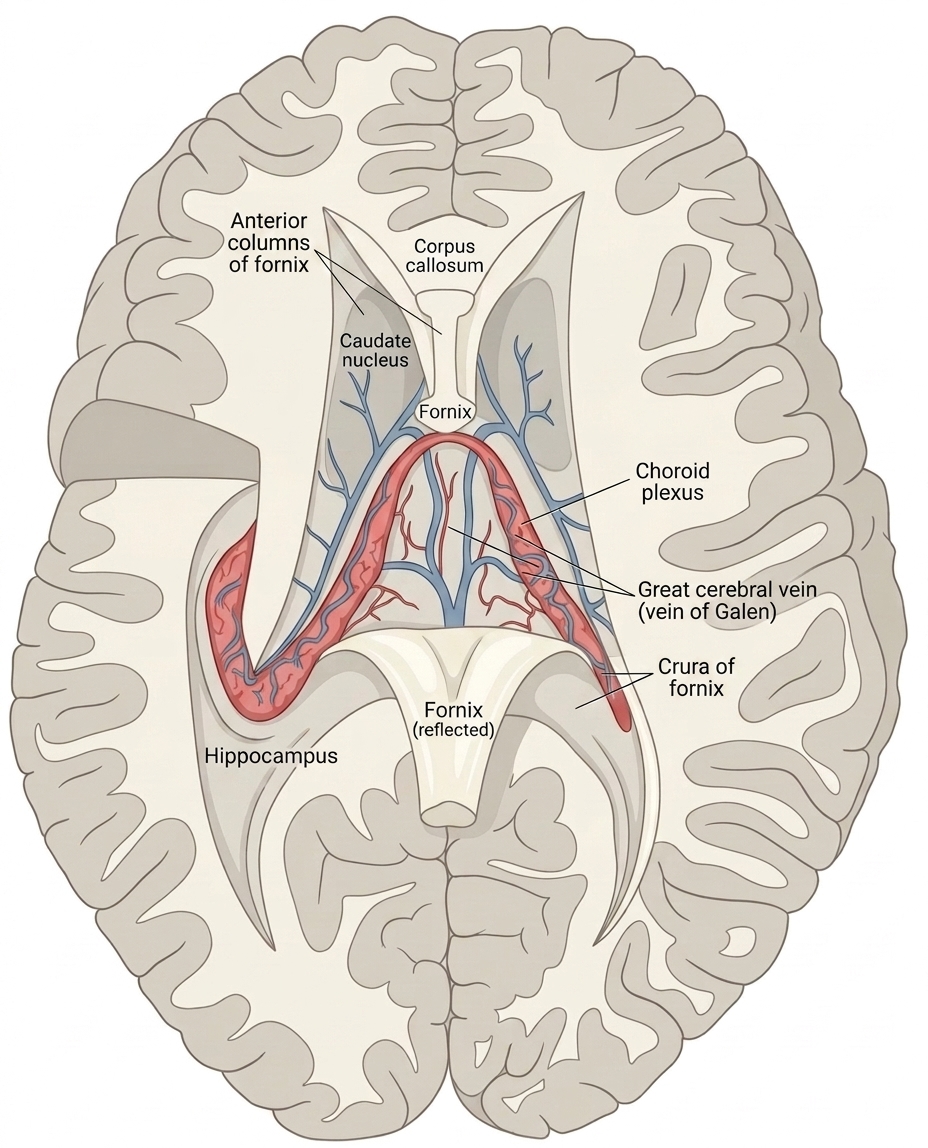
  • Choroid plexus — produces ~70% of CSF; located in lateral, 3rd, and 4th ventricles (most in lateral ventricles)
  • Brain parenchyma (interstitial fluid) — contributes ~30%
  • Total CSF volume: ~150 mL (adults)
  • Production rate: ~20 mL/hr (~500 mL/day)
  • Turnover: entire volume replaced 3–4×/day
  • Mechanism: active secretion (NOT ultrafiltration) — Na+/K+ ATPase on apical membrane of choroid epithelium drives ion transport; carbonic anhydrase involved; acetazolamide ↓ CSF production by inhibiting carbonic anhydrase
Board Pearl

CSF is actively secreted, not passively filtered. Acetazolamide reduces CSF production by inhibiting carbonic anhydrase in the choroid plexus — this is the basis for its use in idiopathic intracranial hypertension (IIH).

CSF Circulation Pathway

Flow Path

  • Lateral ventricles (largest; C-shaped)
  • Foramen of Monro (interventricular foramina) → 3rd ventricle
  • Aqueduct of Sylvius (cerebral aqueduct; narrowest point — most common site of obstruction) → 4th ventricle
  • → Exits via foramina of Luschka (lateral, 2) and foramen of Magendie (midline, 1)
  • Subarachnoid space (cisterns: cisterna magna, prepontine, suprasellar, etc.)
  • Arachnoid granulations (villi) → superior sagittal sinus (venous drainage)

Mnemonic: "Lateral Monro → 3rd → Sylvius → 4th → Luschka/Magendie → SAS → Granulations"

  • Luschka = Lateral (both start with "L"); Magendie = Midline (both start with "M")
  • CSF absorption is pressure-dependent — occurs when CSF pressure exceeds venous sinus pressure
Clinical Pearl

The aqueduct of Sylvius is the narrowest segment of the ventricular system and the most common site of obstruction causing non-communicating (obstructive) hydrocephalus. Aqueductal stenosis can be congenital (X-linked L1CAM mutation) or acquired (tectal glioma, post-infection).

Normal CSF Values
Parameter Normal Value Notes
Opening pressure10–20 cmH2OMeasured in lateral decubitus; >25 cmH2O = elevated
AppearanceClear, colorlessTurbid if WBC >200 or bacteria present
Protein15–45 mg/dLHigher in lumbar (>ventricular); neonates up to 150 mg/dL
Glucose60–70% of serum (>40 mg/dL)Always compare with serum glucose drawn ~30 min prior
WBC<5 lymphocytes/mm³No PMNs normally; neonates up to 20–30 WBC
RBC0If present → traumatic tap vs SAH (see xanthochromia)
Specific gravity1.006–1.009
Chloride115–130 mEq/LHigher than serum; ↓ in TB meningitis (historical marker)
IgG index<0.7↑ in MS and other intrathecal IgG production
Board Pearl

Traumatic tap vs SAH: in traumatic tap, RBC count decreases across sequential tubes; in SAH, RBC count remains constant across tubes. Xanthochromia (yellow supernatant from RBC lysis) is present in SAH (>6–12 hours) but absent in traumatic tap.

CSF in Disease — Master Comparison Table
Condition WBC Cell Type Glucose Protein Other Findings
Bacterial meningitis ↑↑↑ (1000–10,000+) PMNs (neutrophils) ↓↓ (<40 mg/dL) ↑↑ (>100 mg/dL) Turbid; ↑ opening pressure; Gram stain/culture positive
Viral meningitis ↑ (10–500) Lymphocytes Normal Normal–↑ (50–100) Clear; PCR for HSV, enterovirus; early PMNs may shift to lymphs
TB meningitis ↑ (50–500) Lymphocytes ↓↓ ↑↑ (100–500) AFB smear (low sensitivity); adenosine deaminase (ADA) ↑; ↓ chloride
Fungal meningitis ↑ (10–500) Lymphocytes ↑↑ India ink (Cryptococcus); cryptococcal Ag; ↑↑ opening pressure in Crypto
GBS Normal (<10) Normal ↑↑ Albuminocytologic dissociation (↑ protein, normal cells); may be normal first week
MS Normal–mild ↑ Lymphocytes Normal Normal–mild ↑ Oligoclonal bands (present in CSF, absent in serum); ↑ IgG index; ↑ myelin basic protein
SAH Normal Xanthochromia; ↑↑ RBC (uniform across tubes); ↑ opening pressure
Carcinomatous meningitis Lymphocytes + malignant cells ↑↑ Positive cytology (may need repeated LPs); ↑ opening pressure
Neurosyphilis ↑ (10–100) Lymphocytes Normal–↓ CSF VDRL (specific but insensitive); CSF FTA-ABS (sensitive)
Board Pearl

Albuminocytologic dissociation (elevated protein with normal cell count) is the hallmark CSF finding in GBS. It may be absent in the first week of illness. A similar pattern can be seen in spinal cord compression and diabetic radiculoplexopathy.

Key CSF Glucose Rules

  • Low CSF glucose (↓) — bacterial, TB, fungal meningitis; carcinomatous meningitis; neurosarcoidosis; chemical meningitis
  • Normal CSF glucose — viral meningitis, MS, GBS, neurosyphilis (usually)
  • Mnemonic for ↓ glucose: "Bacteria and fungi EAT glucose"
Intracranial Pressure (ICP)

Normal Values & Concepts

  • Normal ICP: 5–15 mmHg (7–20 cmH2O)
  • Monro-Kellie doctrine: the cranial vault is a fixed volume; total volume of brain (~80%) + CSF (~10%) + blood (~10%) is constant → increase in one compartment requires decrease in another, or ICP rises
  • Cerebral perfusion pressure (CPP): CPP = MAP − ICP (goal CPP >60 mmHg)
  • ICP waveforms: P1 (percussion) > P2 (tidal) > P3 (dicrotic) is normal; if P2 > P1 → decreased compliance → impending herniation

Causes of Raised ICP

Mechanism Examples
↑ Brain volumeTumor, abscess, cerebral edema (cytotoxic or vasogenic), hemorrhage
↑ CSF volumeHydrocephalus (obstructive or communicating), choroid plexus papilloma
↑ Blood volumeVenous sinus thrombosis, AVM, hypercarbia-induced vasodilation
OtherIdiopathic intracranial hypertension (IIH), meningitis

ICP Management Principles

  • Head elevation — 30 degrees (improves venous drainage)
  • Hyperosmolar therapy — mannitol (osmotic diuretic) or hypertonic saline
  • Hyperventilation — acute only; ↓ PaCO2 → cerebral vasoconstriction → ↓ ICP (target PaCO2 30–35 mmHg; avoid prolonged use)
  • CSF drainage — EVD (external ventricular drain)
  • Surgical — decompressive craniectomy for refractory raised ICP
Hydrocephalus

Communicating vs Obstructive (Non-Communicating)

Feature Communicating Obstructive (Non-Communicating)
Obstruction siteOutside ventricular system (arachnoid granulations or subarachnoid space)Within ventricular system
All ventricles dilated?Yes (all ventricles communicate)Ventricles proximal to obstruction are dilated
Common causesPost-SAH, post-meningitis, carcinomatous meningitis, venous sinus thrombosisAqueductal stenosis, colloid cyst (3rd ventricle), posterior fossa tumor (4th ventricle), Chiari malformation
TreatmentVP shunt (ventriculoperitoneal)Treat obstruction; ETV (endoscopic third ventriculostomy); VP shunt

Specific Hydrocephalus Locations

Obstruction Site Ventricles Dilated Classic Cause
Foramen of MonroOne lateral ventricle (unilateral)Colloid cyst, subependymal giant cell astrocytoma (tuberous sclerosis)
Aqueduct of SylviusBoth lateral + 3rd ventricleAqueductal stenosis, tectal glioma, pineal tumor
4th ventricle outletsAll four ventriclesPosterior fossa tumor (medulloblastoma in children, ependymoma), Dandy-Walker malformation

Normal Pressure Hydrocephalus (NPH)

  • Type: communicating hydrocephalus with intermittently elevated ICP
  • Demographics: elderly (usually >60 years)
  • Classic triad (wet–wacky–wobbly):
  • Gait apraxia (magnetic gait) — first and most responsive to treatment
  • Dementia (subcortical pattern)
  • Urinary incontinence — last to appear
  • Diagnosis: ventriculomegaly on imaging out of proportion to sulcal atrophy; large-volume LP (>30 mL) with gait improvement
  • Treatment: VP shunt or LP shunt
Board Pearl

In NPH, gait disturbance is the FIRST symptom to appear and the MOST responsive to shunting. The classic "magnetic gait" (feet stuck to the floor, wide-based, short shuffling steps) distinguishes NPH from Parkinson's disease. A large-volume LP with gait improvement predicts shunt responsiveness.

Idiopathic Intracranial Hypertension (IIH) / Pseudotumor Cerebri

  • Demographics: young, obese women of childbearing age
  • Symptoms: headache (worse with Valsalva), transient visual obscurations, pulsatile tinnitus, diplopia (CN VI palsy — false localizing sign)
  • Exam: papilledema (bilateral); enlarged blind spot; visual field loss
  • Imaging: empty sella, flattened posterior sclera, dilated optic nerve sheaths, transverse venous sinus stenosis; no mass lesion
  • LP: opening pressure >25 cmH2O; CSF composition normal
  • Modified Dandy criteria: symptoms of raised ICP, papilledema, normal CSF, ↑ opening pressure, no other cause
  • Treatment: weight loss, acetazolamide (first-line), topiramate, optic nerve sheath fenestration or shunt (if vision threatened)
  • Medications that worsen/cause IIH: vitamin A (retinoids), tetracyclines, growth hormone, corticosteroid withdrawal
Clinical Pearl

CN VI palsy in the setting of raised ICP is a false localizing sign — it results from stretching of the abducens nerve over the petrous ridge due to downward displacement of the brainstem, not a focal lesion. It can occur in IIH, hydrocephalus, or any cause of diffusely elevated ICP.

Blood-Brain Barrier (BBB)

Structure

  • Three layers:
  • Endothelial cells with tight junctions (zonula occludens) — the primary barrier; lack fenestrations; low pinocytic activity
  • Basement membrane — provides structural support; contains pericytes (regulate BBB permeability)
  • Astrocyte foot processes (end-feet) — surround >99% of capillary surface; maintain BBB integrity and induce tight junction formation
  • Note: the BBB exists at cerebral capillaries, NOT at the choroid plexus (which has the blood-CSF barrier instead)

What Crosses the BBB?

Crosses BBB Does NOT Cross BBB
Lipophilic molecules (O2, CO2, ethanol, anesthetics)Hydrophilic/polar molecules
Small molecular weight (<400–500 Da)Large proteins (albumin, immunoglobulins)
Uncharged/non-ionized formsIonized/charged molecules
Glucose (via GLUT1 transporter)Dopamine (but L-DOPA crosses via LNAA transporter)
L-DOPA (via large neutral amino acid transporter)Most antibiotics (exception: metronidazole, chloramphenicol, rifampin, fluoroquinolones cross well)
Nicotine, caffeine, heroin, diazepamPenicillin, vancomycin (unless inflamed meninges)

Key Transporters

  • GLUT1 — glucose transporter; insulin-independent; GLUT1 deficiency syndrome → seizures, microcephaly, low CSF glucose (CSF:serum glucose ratio <0.4)
  • Large neutral amino acid transporter (LNAA/LAT1) — transports L-DOPA, phenylalanine, tryptophan; basis for giving L-DOPA (crosses BBB) instead of dopamine (does not cross)
  • P-glycoprotein (MDR1) — efflux pump on endothelial cells; pumps drugs OUT of CNS; contributes to drug-resistant epilepsy
Board Pearl

Dopamine does NOT cross the BBB, but its precursor L-DOPA does (via the large neutral amino acid transporter). This is why Parkinson's disease is treated with L-DOPA (+ carbidopa to prevent peripheral decarboxylation) rather than dopamine itself. GLUT1 deficiency syndrome should be suspected in a child with refractory seizures and low CSF glucose — treated with a ketogenic diet.

Circumventricular Organs (CVOs) — Regions that LACK a BBB

Circumventricular Organ Location Function
Area postremaFloor of 4th ventricleChemoreceptor trigger zone (emesis); detects blood-borne toxins/emetics
Median eminenceHypothalamus (base)Hypothalamic-pituitary hormone release
Neurohypophysis (posterior pituitary)Sella turcicaRelease of ADH and oxytocin into blood
Pineal glandPosterior 3rd ventricleMelatonin secretion
Subfornical organ (SFO)Anterior 3rd ventricleSenses angiotensin II; regulates thirst and vasopressin release
OVLT (organum vasculosum of lamina terminalis)Anterior 3rd ventricleSenses osmolality and cytokines (fever response); thirst regulation
Subcommissural organPosterior 3rd ventricleSecretes SCO-spondin; involved in CSF flow

Mnemonic for CVOs: "AM-PONS" — Area postrema, Median eminence, Pineal, OVLT, Neurohypophysis, Subfornical organ

Board Pearl

The area postrema lacks a BBB — this allows it to detect circulating toxins and drugs, triggering emesis. This is why chemotherapy-induced nausea involves the area postrema. 5-HT3 antagonists (ondansetron) block serotonin at this site.

BBB Disruption

Causes & Clinical Significance

Cause of BBB Disruption Mechanism Clinical Example
Infection / inflammationCytokines, proteases disrupt tight junctionsMeningitis (allows antibiotics to penetrate better); encephalitis
TumorsTumor neovasculature lacks normal tight junctionsRing-enhancing lesion on MRI (GBM, metastases, abscess)
Ischemia / strokeEnergy failure → endothelial damageHemorrhagic transformation after reperfusion; vasogenic edema
Hypertensive encephalopathy (PRES)Exceeds autoregulatory capacity → forced vasodilation → BBB breakdownPosterior reversible encephalopathy syndrome (PRES); posterior predilection (less sympathetic innervation)
MS (active plaque)Immune-mediated breakdown; T-cell migration across BBBGadolinium-enhancing lesions indicate active BBB breakdown
Osmotic demyelinationRapid correction of hyponatremia → endothelial damageCentral pontine myelinolysis
  • MRI contrast enhancement (gadolinium) — gadolinium does NOT cross an intact BBB; enhancement = BBB breakdown
  • Vasogenic edema — BBB disruption → plasma proteins leak into extracellular space → white matter edema (responds to steroids)
  • Cytotoxic edema — cell swelling due to energy failure (ischemic stroke); BBB initially intact; does NOT respond to steroids
Board Pearl

Vasogenic vs cytotoxic edema: Vasogenic edema (BBB breakdown, affects white matter, responds to steroids — seen in tumors) must be distinguished from cytotoxic edema (cell swelling, affects gray matter, does NOT respond to steroids — seen in acute ischemic stroke). DWI-bright lesions in stroke represent cytotoxic edema (restricted diffusion).

Drugs: BBB Penetration

Good BBB Penetration Poor BBB Penetration (crosses with inflamed meninges) Poor BBB Penetration (does not cross well even with inflammation)
MetronidazolePenicillin / ampicillinAminoglycosides (gentamicin)
ChloramphenicolVancomycinFirst-gen cephalosporins
Rifampin3rd-gen cephalosporins (ceftriaxone)Clindamycin
FluoroquinolonesMeropenem
TMP-SMXAmphotericin B
Isoniazid, pyrazinamide
Lumbar Puncture (LP)

Indications

  • Suspected meningitis or encephalitis
  • Subarachnoid hemorrhage (if CT negative)
  • Measurement of opening pressure (IIH, NPH)
  • Therapeutic removal of CSF (IIH, NPH evaluation)
  • Intrathecal drug administration (chemotherapy, baclofen, anesthesia)
  • Diagnosis of MS, GBS, neurosyphilis, carcinomatous meningitis

Contraindications

  • Absolute: intracranial mass with midline shift or risk of herniation; skin infection at puncture site
  • Relative: coagulopathy (INR >1.5, platelets <50,000); therapeutic anticoagulation; raised ICP without imaging
  • When to image before LP: immunocompromised, history of CNS disease, new-onset seizures, papilledema, focal neurological deficit, altered consciousness

Technique

  • Position: lateral decubitus (for accurate opening pressure) or sitting
  • Level: L3–L4 or L4–L5 interspace (below the conus medullaris, which ends at ~L1–L2 in adults)
  • Landmark: iliac crest line = approximately L4 spinous process
  • Layers traversed: skin → subcutaneous tissue → supraspinous ligament → interspinous ligament → ligamentum flavum → epidural space → dura mater → arachnoid mater → subarachnoid space

Complications

Complication Details
Post-LP headacheMost common (~10–30%); positional (worse upright, better supine); due to CSF leak; risk factors: young, female, large needle; Tx: caffeine, epidural blood patch; use atraumatic needle to ↓ risk
HerniationRare but fatal; risk with posterior fossa mass or midline shift; always image first if concerned
CSF leak / fistulaPersistent leak from dural tear
Back painUsually self-limited
Epidermoid tumorRare; from implantation of skin cells if needle lacks stylet
Infection / epidural abscessRare; due to poor sterile technique
Clinical Pearl

Post-LP headache is caused by ongoing CSF leak through the dural puncture site, leading to low CSF pressure and traction on pain-sensitive meningeal structures. Using an atraumatic (pencil-point/Sprotte) needle reduces the risk compared to a cutting (Quincke) needle. First-line treatment for persistent post-LP headache is an epidural blood patch.

Quick Reference — Summary Table

Topic Key Fact
CSF volume~150 mL total; produced at ~20 mL/hr (~500 mL/day); turned over 3–4×/day
CSF productionChoroid plexus (70%), brain parenchyma (30%); active secretion; acetazolamide ↓ production
Narrowest pointAqueduct of Sylvius — most common site of obstructive hydrocephalus
CSF absorptionArachnoid granulations → superior sagittal sinus; pressure-dependent
Luschka vs MagendieLuschka = Lateral (2); Magendie = Midline (1)
Normal opening pressure10–20 cmH2O
CPP equationCPP = MAP − ICP; goal >60 mmHg
NPH triadGait apraxia (first/most treatable) → dementia → urinary incontinence (last)
IIHYoung obese women; papilledema; empty sella; normal CSF; ↑ opening pressure; Tx: weight loss + acetazolamide
BBB structureEndothelial tight junctions + basement membrane + astrocyte foot processes
BBB crossingLipophilic, small (<400 Da), uncharged molecules; GLUT1 (glucose), LNAA (L-DOPA)
CVOs (no BBB)Area postrema, median eminence, neurohypophysis, pineal, subfornical organ, OVLT
Contrast enhancementGadolinium does NOT cross intact BBB; enhancement = BBB breakdown
Vasogenic vs cytotoxic edemaVasogenic: BBB breakdown, white matter, responds to steroids; Cytotoxic: cell swelling, gray matter, no steroid response
LP levelL3–L4 or L4–L5 (below conus at L1–L2)
Post-LP headachePositional; Tx: epidural blood patch; prevent with atraumatic needle
Albuminocytologic dissociation↑ protein, normal cells = GBS
Oligoclonal bandsPresent in CSF but not serum = MS
XanthochromiaYellow supernatant = SAH (>6–12 hrs old); absent in traumatic tap

References

  • Bhatt A. Ultimate Review for the Neurology Boards. 3rd ed. Demos Medical; 2016. Chapter 1: Neuroscience.
  • Blumenfeld H. Neuroanatomy Through Clinical Cases. 3rd ed. Sinauer Associates; 2021.
  • Ropper AH, Samuels MA, Klein JP, Prasad S. Adams and Victor's Principles of Neurology. 12th ed. McGraw-Hill; 2023.
  • Waxman SG. Clinical Neuroanatomy. 29th ed. McGraw-Hill; 2020.
  • Fishman RA. Cerebrospinal Fluid in Diseases of the Nervous System. 2nd ed. Saunders; 1992.